
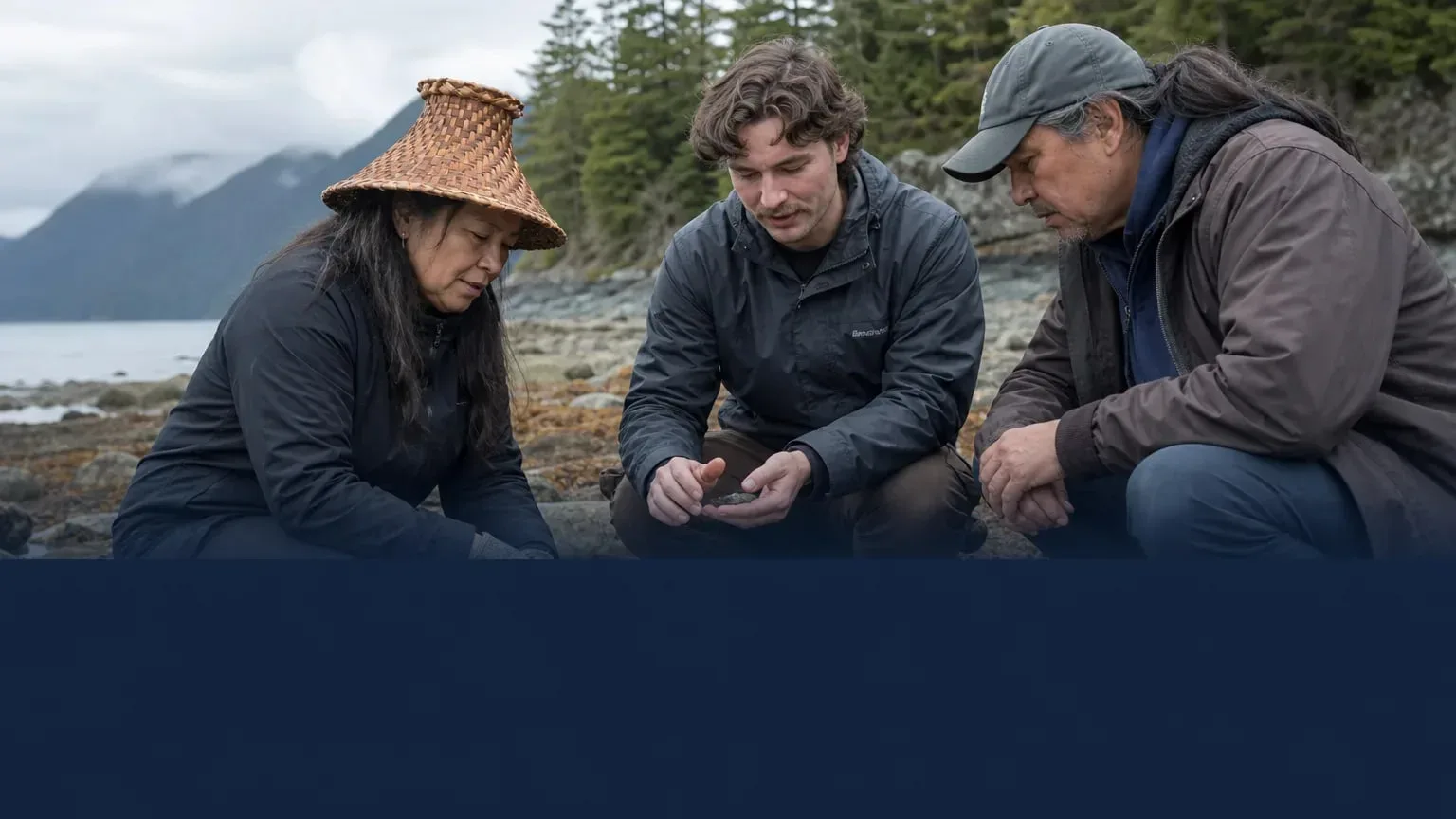
Benjamin Mulchinock, a doctoral student in philosophy at the University of British Columbia, is researching how scientists and Indigenous knowledge holders collaborate in studies of the first migration into the Americas. His work focuses on when and how it is ethically and epistemically warranted for non-Indigenous paleoscientists to engage with Indigenous knowledge.
Key facts
- Mulchinock is enrolled in the Doctor of Philosophy in Philosophy program at UBC’s Faculty of Arts.
- His research topic is “Scientific pluralism in action: Indigenous collaborative research and the first migration into the Americas.”
- His supervisor is Alison Wylie.
- He has received the Canada Graduate Scholarships Doctoral (CGS D) Program and the Tri-Agency Indigenous Scholars Awards and Supplements Pilot Initiative.
- He is from Victoria, Canada.
What does this research mean for graduate students and researchers?
Mulchinock’s project shows how doctoral research can sit at the intersection of philosophy, science, and Indigenous knowledge. For graduate students and researchers working in related fields, the practical issue is not only whether different forms of evidence can be compared, but also how ethical systems, ontologies, and epistemologies shape that comparison.
His case study centers on the reassessment of the Clovis-first theory of the peopling of the Americas, using evidence from paleogenomics, geochronology, paleoecology, archaeology, and Indigenous oral history. The project highlights the need for careful collaborative research when different knowledge traditions are involved.
Why did he choose UBC?
Mulchinock said UBC appealed to him because it supported graduate students, offered a competitive funding package, and provided opportunities to present work internationally. He also pointed to the department’s interdisciplinary environment, the strength of its philosophy faculty, and the chance to remain close to home in British Columbia.
He said the philosophy department has been more cohesive and mutually supportive than he expected, with many opportunities to share ideas, attend talks, and take part in workshops.
How is his research framed?
His work asks how knowledge producers from different epistemic traditions can jointly create new knowledge. More specifically, he examines under what conditions collaboration between non-Indigenous paleoscientists and Indigenous knowledge holders is ethically and epistemically justified.
Rather than treating Indigenous oral history as simply one more data source, the project looks at the deeper differences in values, worldviews, and methods that shape evidential comparisons.
What prepared him for graduate school?
Mulchinock said working as a resident assistant during his undergraduate studies helped prepare him for the communal and interpersonal side of graduate school. He said that experience involved working with other students to solve problems for first-year residents, which translated well to the collaborative demands of doctoral study.
He also said graduate school gives him a place to develop writing, organizing, and speaking skills while working on questions that bridge science and philosophy.
Frequently asked questions
What is Benjamin Mulchinock studying at UBC?
He is a PhD student in philosophy researching scientific pluralism, Indigenous collaborative research, and the first migration into the Americas. His project examines how scientists and Indigenous knowledge holders can work together across different epistemic traditions.
Who supervises his doctoral research?
His research supervisor is Alison Wylie, a UBC philosopher whose own work includes philosophy of science and Indigenous knowledge.


