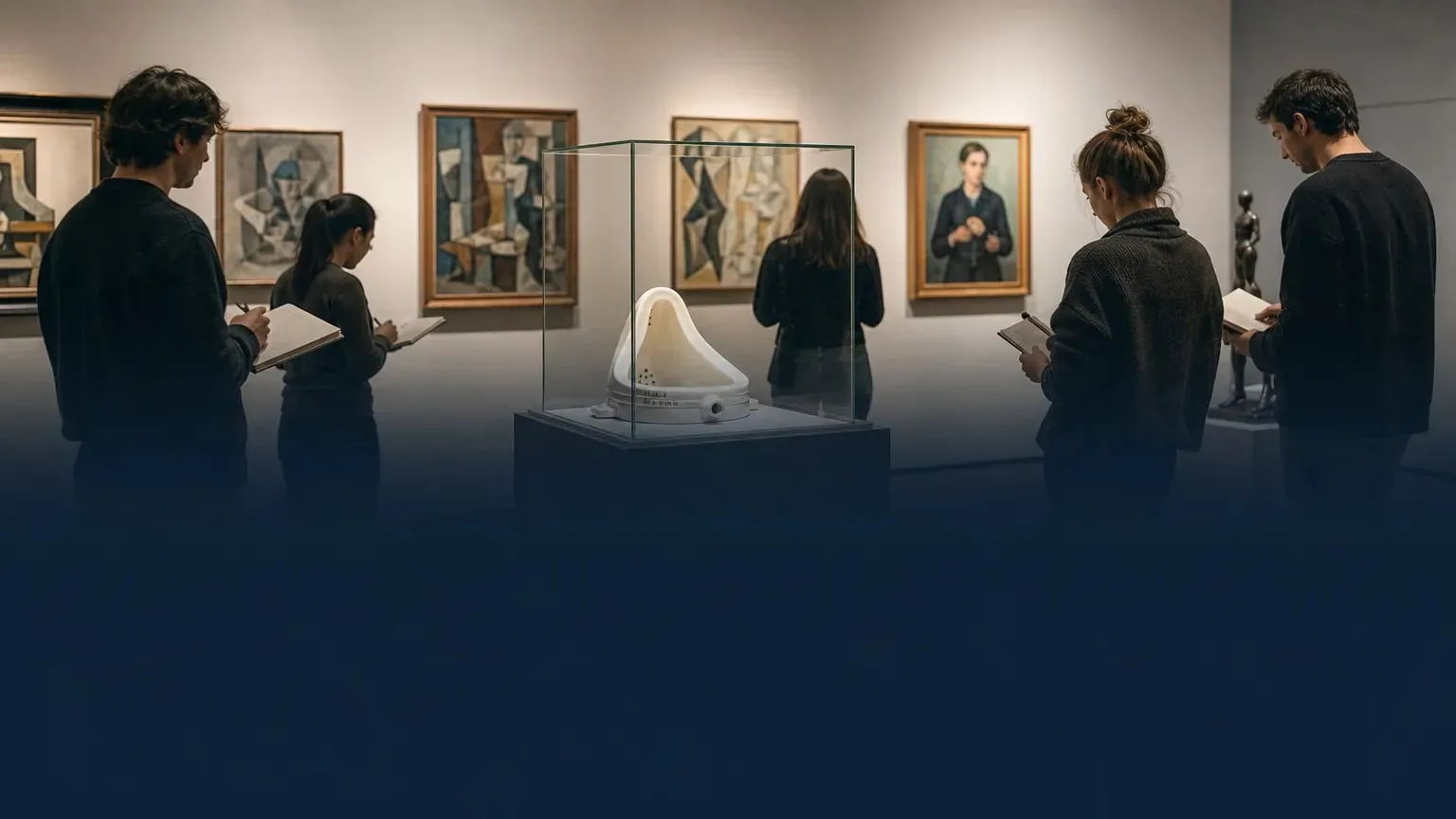
NYU School of Professional Studies is offering a course that looks at why some 20th-century works came to be regarded as modern masterpieces, even when they first divided audiences. The class centers on controversial and influential works by Pablo Picasso, James Joyce, Igor Stravinsky, Marcel Duchamp, Gertrude Stein and John Cage, and it pairs classroom discussion with museum visits in New York City.
Key facts
- The course examines how major modern works challenged prevailing artistic standards and later gained cultural significance.
- Works named in the description include Les Demoiselles d’Avignon, Ulysses, The Rite of Spring, Fountain, The Making of Americans and 4’33’’.
- Students will use Gertrude Stein’s essay What Are Masterpieces and Why Are There So Few of Them as a framework for judging masterpieces.
- The course includes field trips to the Guggenheim Museum and the Metropolitan Museum of Art.
- Registration is recommended at least three weeks before the course start date, and the listing says registration is closed.
What does this mean for students and arts professionals?
The course is aimed at art enthusiasts, aspiring arts professionals and working arts professionals who want to study how modern works were initially received and how their reputations changed over time. It is designed to help participants analyze artistic innovation through historical examples rather than treating masterpieces as fixed or self-evident.
For students and professionals considering the class, the practical takeaway is the mix of critical study and on-site viewing. The listing says participants will analyze modern works that provoked debate, apply criteria for evaluating masterpieces from both historical and contemporary perspectives, and engage directly with museum collections in New York City.
- Who it is for: Art enthusiasts, aspiring arts professionals and working arts professionals.
- Where it happens: Classroom study with visits to the Guggenheim Museum and the Metropolitan Museum of Art.
- What to study: Modern works in art, literature and music, plus Stein’s essay on masterpieces.
- Timing: Registration is recommended at least three weeks before the course start date, but the listing states registration is closed.
How does the course define a modern masterpiece?
It asks students to examine how works that were once controversial or provocative can come to be seen as culturally significant. The course uses Gertrude Stein’s essay as a framework and asks participants to develop their own judgments about what qualifies as a masterpiece.
The approach is comparative rather than single-discipline. The syllabus description brings together painting, literature, music and conceptual art, suggesting that the course is meant to test how artistic standards shift across forms and across time.
Which works are part of the syllabus?
The course description specifically names Picasso’s Les Demoiselles d’Avignon, Joyce’s Ulysses, Stravinsky’s The Rite of Spring, Duchamp’s Fountain, Stein’s The Making of Americans and Cage’s 4’33’’. It also notes a visit to the Metropolitan Museum of Art to see Picasso’s portrait of Gertrude Stein and other modern favorites.
Those selections point to the course’s central theme: works that were contested at first and later shaped broader ideas of modern art and literary excellence.
Why are the museum visits important?
The listing builds field trips into the course so students can engage directly with the works and their institutional settings. One visit is to the Guggenheim Museum to explore Frank Lloyd Wright’s architectural landmark, and another is to the Metropolitan Museum of Art to view Picasso’s portrait of Gertrude Stein.
That structure gives the course a practical dimension. Rather than relying only on reading and lecture, students are asked to compare critical ideas with objects and spaces they can see in person.
Who can still register?
The course page says registration is recommended at least three weeks before the course start date, but it also states that registration is closed. That means the listing is currently not accepting new enrollments.
Anyone interested in similar offerings would need to watch for future openings or related courses from the same program, since the published page does not indicate that this session remains available.