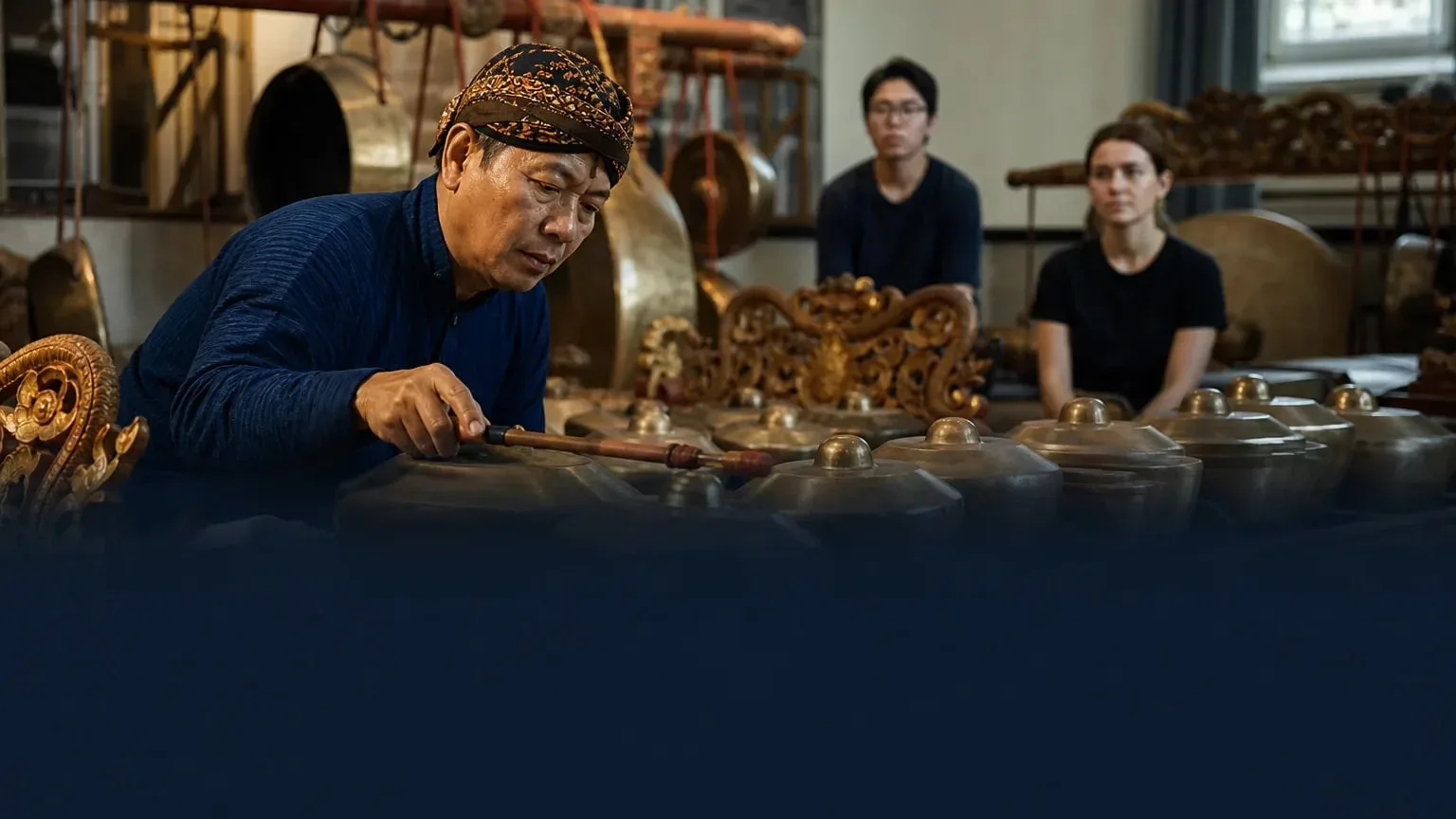
In early September, Yale brought in master tuner Bapak Wibawa to service its gamelan in Stoeckel Hall, giving students and attendees a firsthand look at a skill so specialized that Yale lecturer and gamelan musician Phil Acimovic said there may be only one or two people in the United States who can tune a gamelan. The visit mattered because the ensemble is not only part of Yale’s music life but also a living link to a centuries-old Indonesian tradition.
Key facts
- Wibawa, from Yogyakarta, Central Java, traveled to Yale to tune the university’s gamelan.
- The tuning work involved shaving and hammering material to adjust pitch.
- Acimovic said Wibawa expected about 10 days of work but finished in 4 days.
- The event was hosted by the MacMillan Center’s Council on Southeast Asia Studies.
What this means for Yale students and the wider campus community
For Yale students, the tuning demonstration was more than a behind-the-scenes maintenance visit. It showed how the university keeps the gamelan playable, how the instruments are cared for, and how a specialist from Indonesia helps preserve a tradition that Yale students can study and perform.
Acimovic teaches a course called “Central Javanese Gamelan Ensemble,” where students learn the history of gamelan and how to play it. The class ends with a public performance, and in recent years that performance has included a shadow play accompanied by gamelan. Yale also offers two ensembles in a typical year, with between 100 and 200 students applying for about 15 to 20 places in each ensemble.
That means access is limited, but the program is active and public-facing. Students who join learn in weekly rehearsals, work in a community setting, and engage with a musical form that Acimovic said can serve ceremonies, broadcasts, weddings, graduations, and theater.
Why is gamelan tuning such a rare skill?
Because the instruments are tuned by physically altering their material rather than by a simple mechanical adjustment, the work requires deep technical knowledge and familiarity with the ensemble. Acimovic said there may be only one or two people in the United States who can do it. Wibawa’s visit therefore represented not just routine upkeep, but the transfer of specialized expertise.
What students can learn from Yale’s gamelan program
The Yale program combines performance, historical study, and cultural context. Acimovic, who studied Javanese gamelan in Indonesia for two years after becoming interested in college, now teaches students about the tradition at Yale. The ensemble work is community-based and closely tied to the idea that gamelan is an active cultural practice, not simply a museum object.
Acimovic described gamelan as music tied to many kinds of public life, from celebrations to more solemn occasions, and said the fact that it is happening can matter even apart from a concentrated audience. That framing helps explain why Yale’s maintenance of the ensemble and its public demonstration have significance beyond the classroom.
How does Yale connect to Indonesian gamelan tradition?
Yale connects through both teaching and performance. Acimovic teaches the tradition, students rehearse in ensembles, and the university occasionally hosts public events such as the early September tuning demonstration. The visit by Wibawa, who builds and tunes gamelan sets in Yogyakarta and performs at the Paku Alaman Palace, tied Yale directly to a living tradition in Indonesia.
FAQ
Who tuned Yale’s gamelan during the September event?
Bapak Wibawa, a master tuner from Yogyakarta, Central Java, tuned Yale’s gamelan during the early September demonstration.
What does Yale’s gamelan class culminate in?
Phil Acimovic’s “Central Javanese Gamelan Ensemble” class culminates in a public performance, which in recent years has included a shadow play accompanied by gamelan.