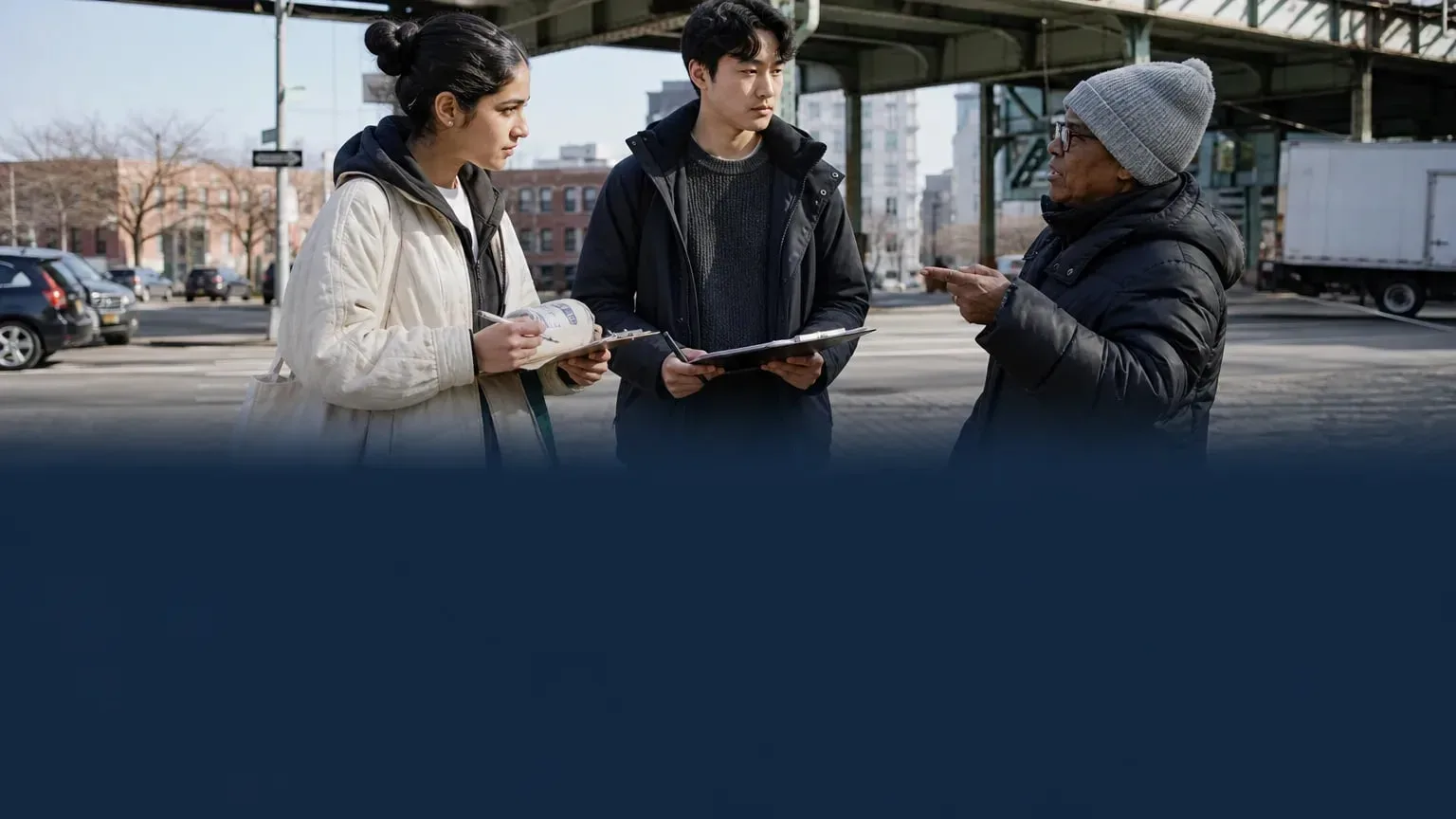
Two NYU School of Professional Studies students worked with Solar One to strengthen community solar outreach in New York City, focusing on how residents in historically underserved neighborhoods learn about, trust and enroll in clean energy programs. The project paired policy study with field outreach and aimed to make community solar more accessible in practice, not just in theory.
Key facts
- Bintou Diene and Jimena Rojo Parraga are Global Energy, Climate, and Sustainability fellows at NYU SPS.
- They are both pursuing an MS in Global Affairs.
- The students conducted tabling events, surveys and canvassed underserved New York City neighborhoods.
- The outreach focused on energy costs, community solar programs and program enrollment barriers.
- The article was published on November 2, 2026, and is based in New York City.
What does this mean for students and community members?
The project shows how fellowship-based experiential learning can move beyond classroom study into public-facing work. For the students, the assignment built communication skills, community engagement experience and practical exposure to the energy sector. For residents, it points to a basic but important challenge: a program can exist without being widely understood, trusted or easy to access.
The students’ outreach centered on gathering feedback that could help improve enrollment and public trust in community solar. That makes the work relevant to anyone interested in clean energy adoption, especially in neighborhoods that have historically been underserved by energy programs.
- Who was involved: NYU SPS students Bintou Diene and Jimena Rojo Parraga.
- Where it happened: historically underserved neighborhoods across New York City.
- What they did: tabling, surveys and neighborhood canvassing.
- Why it matters: the work aimed to identify barriers to clean energy access and improve outreach.
How did the project try to improve clean energy access?
The students used direct community engagement to understand why community solar programs may not reach the people they are meant to serve. By speaking with residents and collecting data in the field, they sought actionable recommendations for improving enrollment and public trust.
The effort linked energy policy, economics and local outreach. According to the article, the students worked in real-world settings and built relationships with local institutions, helping connect high-level sustainability ideas to everyday community needs.
What did the students take away from the experience?
Bintou Diene said the main takeaway was that making a program available does not necessarily mean people know about it, trust it or can access it. Jimena Rojo Parraga said the outreach pushed her outside her comfort zone and strengthened her communication skills as she learned to deliver a concise, compelling pitch in person.
Both students said the project helped them apply what they are learning in the MS in Global Affairs program to practical work. Diene said she hopes to build a career at the intersection of energy, economic development and public policy, while Rojo Parraga plans to focus on the global economy, energy storage and electric grid efficiency.
Why does this fellowship matter now?
Diene encouraged other CGA students to apply for the Global Energy, Climate, and Sustainability Fellows Program. She described it as a chance to gain hands-on experience, collaborate with practitioners and see how classroom learning translates into the real world.
The fellowship appears designed to bridge academic study with field experience, and this project shows one way that can happen: by pairing students with organizations working on energy access and public outreach in New York City.