
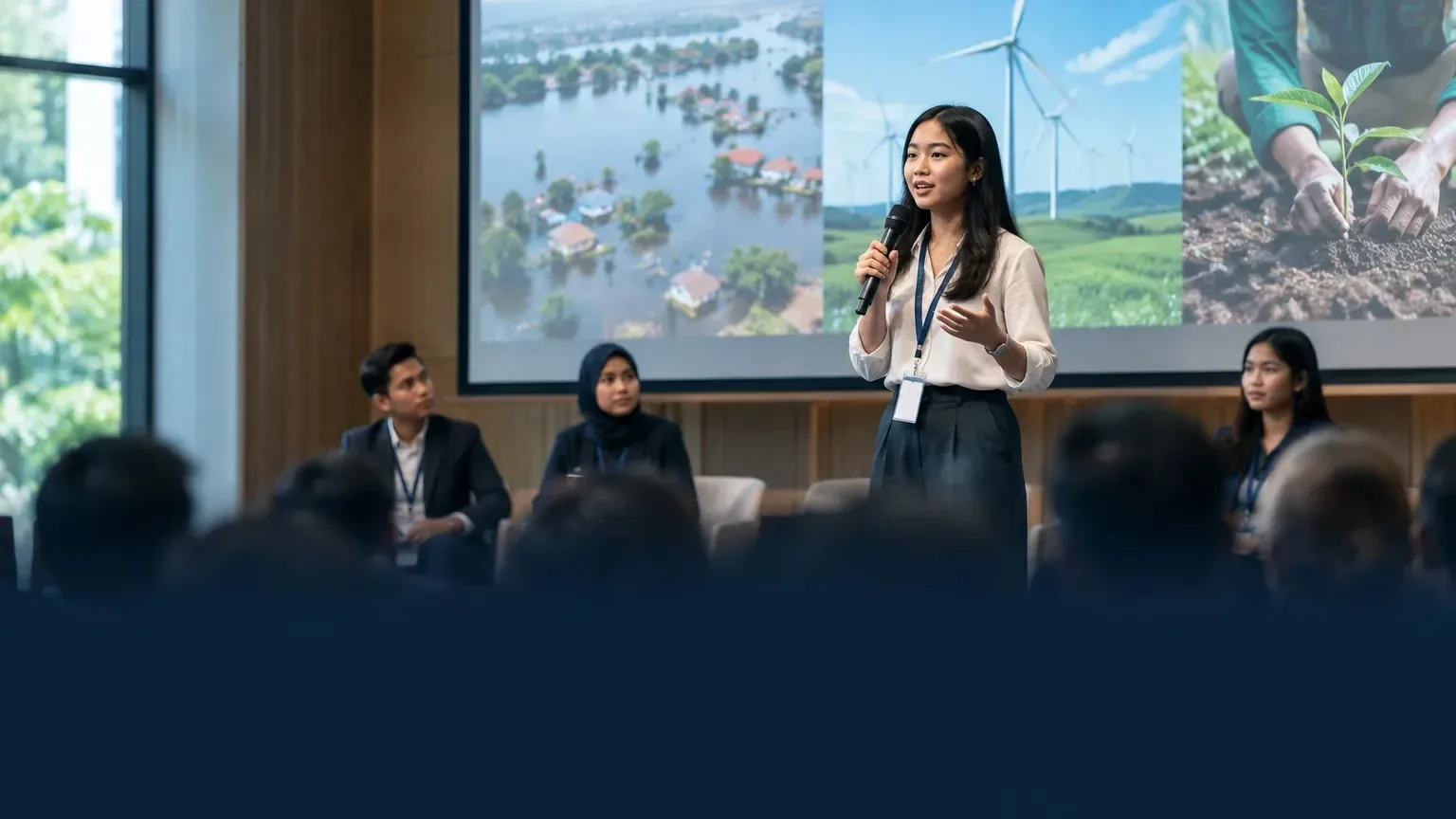
Ninety-one young leaders from all 11 ASEAN countries gathered at the National University of Singapore from 10 to 12 September 2026 for the inaugural ASEAN Symposium for Youth Leaders, where student teams presented long-term ideas for tackling regional challenges including flooding, energy resilience and unequal access to education and work. The event matters because it brought together undergraduate and postgraduate students focused on governance, public policy and international affairs to imagine practical futures for communities across Southeast Asia.
Key facts
- The inaugural ASEAN Symposium for Youth Leaders was organised by the Lee Kuan Yew School of Public Policy at NUS from 10 to 12 September 2026.
- Participants included 91 young leaders from all 11 ASEAN countries.
- The students were selected based on their interest in governance, public policy and international affairs.
- Top proposals focused on Hagonoy in the Philippines, Metro Manila’s coastal energy system, and a green education hub in Ngoi, Laos.
What happened at the ASEAN youth symposium?
The symposium asked student participants to imagine how Southeast Asia could look different by 2050, despite current pressures such as climate change and unequal access to education and economic opportunity. The strongest proposals combined environmental adaptation with jobs, training and local decision-making, rather than treating those issues separately.
According to the event account, the participants came from across the region and developed ideas rooted in specific local problems. The three highlighted teams proposed plans for a flood-prone coastal municipality in the Philippines, a renewable energy network for Metro Manila, and a skills and training hub in northern Laos.
Three ideas for the Southeast Asia young people want to see
The winning team, SEAblings, focused on Hagonoy in Bulacan in the Philippines, where rising tides and strong typhoons bring frequent flooding that affects daily life and livelihoods. Its 2050 Flooding Mitigation and Adaptation Masterplan envisioned turning Hagonoy into the country’s “Blue Economy Capital” through flood-resilient infrastructure, mangrove restoration, aquaculture and water-based tourism.
A team member, Qjiel Giuliano Mikhl Zamora Mariano, a Master of Science in Sustainable Healthcare student at NUS from the Philippines, linked the idea to healthcare access during major typhoons, when some families may need sea ambulances to reach hospitals.
First runner-up team RICE FAM turned to Metro Manila, where growing electricity demand, limited land and extreme weather were described as barriers to reliable and affordable power. The team proposed a Manila Urban Renewable Energy Network using floating solar panels, wind turbines and wave-energy technologies, with local electricity storage to support homes, schools and hospitals during power disruptions. The proposal also included a weather-monitoring system designed to move floating equipment into a protective onshore structure when typhoons approach.
Second runner-up team Six Sense addressed youth opportunity in Ngoi in northern Laos. Starting from a teammate’s account of students leaving school early because local opportunities are limited, the team proposed transforming the area into a green education hub by 2050. Its plan connected vocational training, business partnerships and internships to sectors including ecotourism, clean energy and green transportation.
What does this mean for students and young people in Southeast Asia?
For students, the symposium shows how youth policy discussions are being tied to concrete local challenges rather than abstract regional goals. The participants were undergraduate and postgraduate students chosen for their interest in governance, public policy and international affairs, and the highlighted projects linked those fields to issues that affect communities directly: flood safety, access to electricity, healthcare continuity, schooling and jobs.
The proposals also point to the kinds of careers and skills that may matter more in the region’s future. Across the three teams, those included sustainable infrastructure, coastal and environmental restoration, renewable energy systems, vocational education, ecotourism and public policy design that includes community input.
- Who was involved: 91 young leaders from all 11 ASEAN countries, including undergraduate and postgraduate students.
- Where: The symposium was held at NUS in Singapore, while featured proposals focused on the Philippines and Laos.
- Why it matters: The projects connected regional challenges to practical ideas for jobs, training, services and resilience in local communities.
- What stands out: The proposals combined environmental goals with economic opportunity, public services and local participation.
Why do these proposals stand out?
They stand out because each one treated climate, infrastructure and opportunity as connected problems. In Hagonoy, flood protection was paired with livelihoods through aquaculture and tourism. In Metro Manila, renewable power was tied to affordability, resilience and community participation. In Ngoi, education was framed not simply as schooling, but as a route into sustainable local industries that could help young people build futures closer to home.
That shared approach was echoed by Ong Toon Hui, Vice Dean and Executive Director of the Institute for Governance and Leadership at the Lee Kuan Yew School of Public Policy, who said participants were united by an interest in co-creating meaningful responses to current governance challenges.
FAQ
When and where was the ASEAN Symposium for Youth Leaders held?
The inaugural ASEAN Symposium for Youth Leaders was organised by the Lee Kuan Yew School of Public Policy at the National University of Singapore from 10 to 12 September 2026.
Who took part in the symposium?
The event brought together 91 young leaders from all 11 ASEAN countries. The participants were undergraduate and postgraduate university students selected for their interest in governance, public policy and international affairs.
What were the three highlighted proposals about?
The featured teams proposed a flood mitigation and blue economy plan for Hagonoy in the Philippines, a renewable energy network for Metro Manila, and a green education hub in Ngoi in northern Laos.


