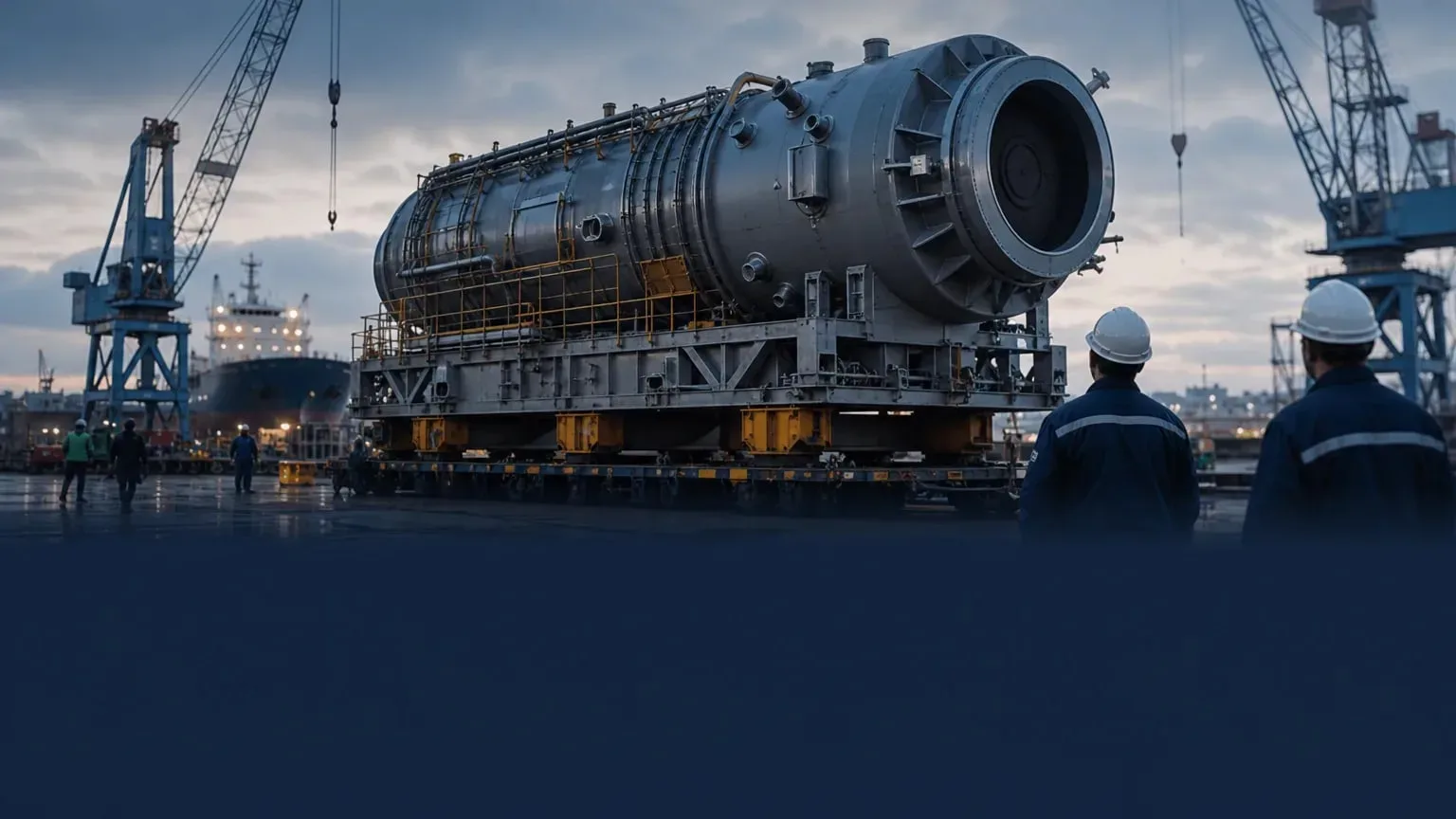
Blue Energy is trying to change how nuclear plants are built by moving much of the work into shipyards. The startup says that approach could reduce the delays, financing risk and cost overruns that have slowed new nuclear construction in the U.S. and elsewhere. Its first project is planned for Victoria, Texas, and is scheduled to begin producing power in 2030.
Key facts
- Blue Energy prefabricates large “Blue Block” modules at shipyards and ships them by barge to the plant site for final assembly.
- The company says its early plants will start on gas before switching to nuclear reactors, a design it says can help secure financing and generate revenue sooner.
- Its first project is a 2.5 gigawatt hybrid nuclear power plant in Victoria, Texas, with power expected in 2030.
- Blue Energy submitted the first part of its application to the Nuclear Regulatory Commission in September and says it is one of five companies to do so in the current nuclear development era.
- The company says later projects could shorten construction to about 36 months and reach about $5,000 per kilowatt.
What this means for students and universities
The development is most relevant to students and researchers in nuclear engineering, physics, energy systems and construction-related fields. Blue Energy’s model centers on shipyard fabrication, modular assembly and licensing-ready reactor design, which are all areas where university research and technical training can feed directly into industry practice.
For universities and students following the nuclear sector, the practical significance is the possibility of a different workforce model: more emphasis on controlled manufacturing environments, welding, modular systems and project execution rather than only traditional on-site nuclear construction. The company’s approach is also tied to financing and regulatory strategy, so research that connects engineering, project delivery and nuclear licensing is especially relevant.
How does Blue Energy say it will build nuclear plants faster?
Blue Energy says the key change is to prefabricate major plant sections at shipyards, where workers and equipment already support large steel fabrication, and then transport those modules to the project site. The company says that controlled environment can reduce uncertainty, improve automation and make construction more predictable than traditional nuclear builds.
Founder and CEO Jake Jurewicz says the company’s plants are designed around a conventional reactor approach rather than a novel safety system. He argues that the industry’s core problem is construction, not nuclear technology itself, and that shipyards and fabrication yards are better positioned to take on construction risk.
What is the Texas project?
Blue Energy’s first project is a hybrid nuclear power plant in Victoria, Texas, developed with GE Vernova Hitachi Nuclear Energy. The facility is planned to provide 1 gigawatt of power using two GE Vernova gas turbines in 2030, then add another 1.5 gigawatts from up to five small modular reactors beginning in 2032.
The company says the early gas generation is meant to bring power and revenue online sooner, while the later nuclear phase would expand the site’s output. Blue Energy says the plant could also support applications such as water desalination and provide jobs and local economic growth in south Texas.
Why is the company focusing on shipyards?
Shipyards already have skilled workers, specialized equipment and experience building large steel structures, Blue Energy says. That, the company argues, makes them a better fit for nuclear fabrication than trying to assemble everything from scratch at a remote plant site.
Jurewicz has said the company looked at offshore oil and gas and shipyard manufacturing in the U.S. and South Korea for lessons on how to execute large industrial projects. He says those industries already know how to manage steel welding, modular execution and controlled fabrication.
What could this mean for the wider nuclear industry?
If Blue Energy can deliver its project on schedule, the company believes it could help reset expectations for nuclear construction by reducing financing risk and shortening timelines. That matters because the industry has long struggled with overruns and delays, and large projects have often failed to attract the financing needed to move forward.
Blue Energy is betting that a manufacturing-led model, combined with a staged gas-to-nuclear rollout, can make power purchase agreements easier to sign. Its broader pitch is that a more predictable build process could reopen the door to more U.S. nuclear development.