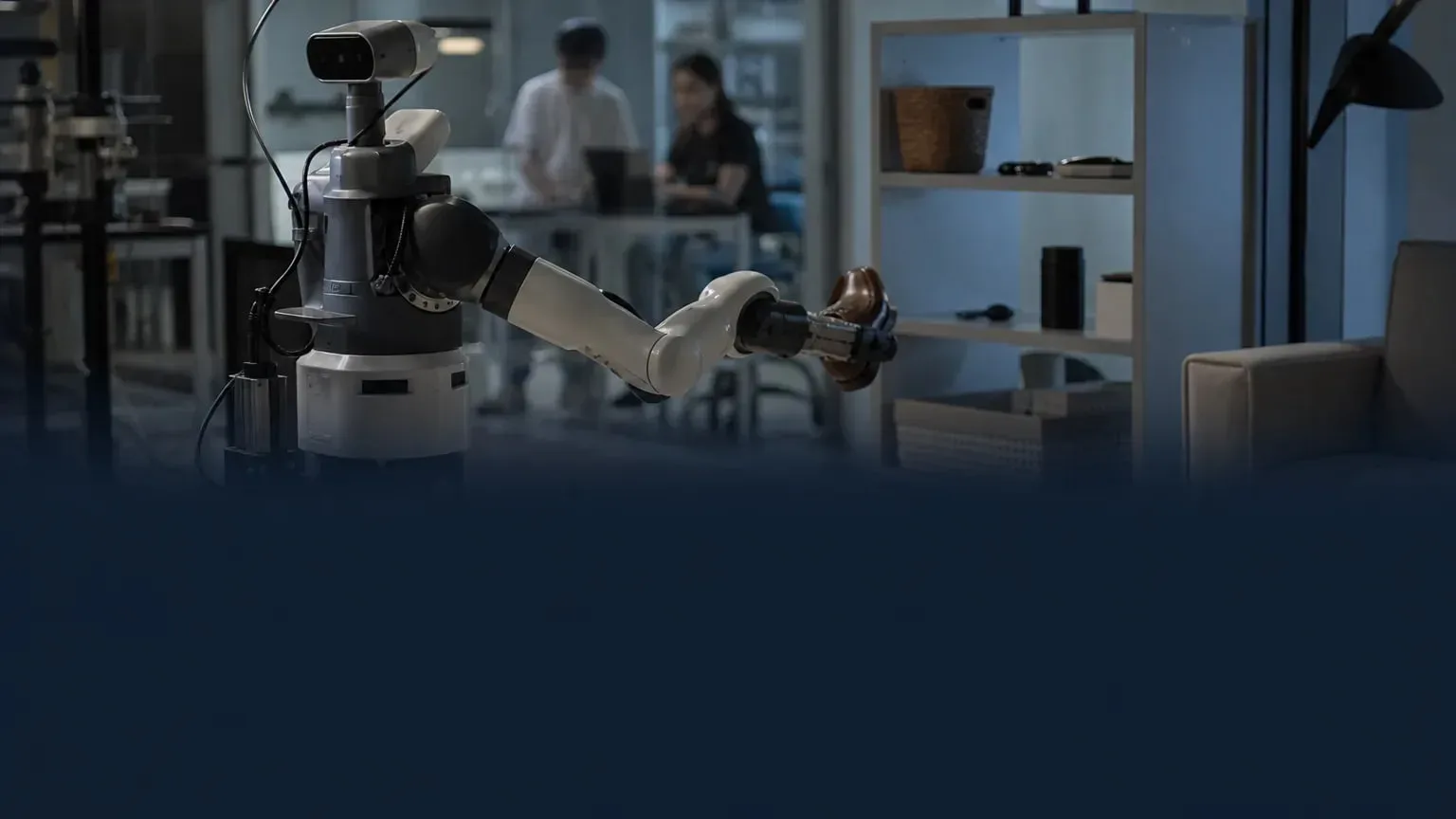
MIT researchers have developed a new memory system for robots that is designed to catch mislabeled objects before those errors spread through a robot’s map of the world. The method, called UQ-DAAAM, helps a robot identify uncertain descriptions, collect better views of the same object and replace unreliable captions with more accurate ones.
Key facts
- UQ-DAAAM stands for Uncertainty Quantification for Describe Anything, Anywhere, at Any Moment.
- The system compares multiple descriptions of the same object from different viewpoints to measure uncertainty.
- When uncertainty is high, the robot selects additional views to improve the object caption and stores the refined description in memory.
- In tests, the method resolved ambiguities for about 92 percent of objects while using only two additional captions per object.
- The researchers say the system improved object-description accuracy by 5 percent compared with the state of the art.
What does this mean for robots in homes and workplaces?
The practical effect is that a robot could be less likely to carry forward a bad label for something important, such as confusing a defibrillator with a fire extinguisher. That matters when the machine is expected to help in time-sensitive settings or complete multi-step tasks that depend on knowing what an object is and where it was last seen.
The system is aimed at robots that move through an environment, collect images over time and store those images as captions in a 3D map-based memory. By using extra viewpoints only when uncertainty is high, the method is designed to keep updating memory in real time without rerunning the vision-language model for every frame.
According to the researchers, the approach could be useful for household or industrial robots, including machines that clear a table or work alongside human collaborators to assemble equipment. They also say the same uncertainty-quantification framework may later be extended to mobile robotic manipulators and to other prediction tasks.
How does UQ-DAAAM work?
The system builds on the team’s earlier DAAAM memory framework, which uses a vision-language model to create detailed captions for objects seen by a robot’s onboard cameras. UQ-DAAAM adds a layer that checks how confident the robot should be about each caption before it is saved as part of memory.
It does that in two steps. First, it evaluates the language model’s confidence in the words it generated. Then it compares captions for the same object from different viewpoints to see whether they agree. Those signals are fused into a single uncertainty score. If the score is too high, the robot looks for more useful images of the same object and uses them to refine the caption.
The researchers say their selection heuristic can identify the best additional frames without rerunning the vision-language model, which reduces computation enough for a mobile robot to keep updating memory while moving.
Why does better robot memory matter?
Robots working in real environments do not always see objects clearly. They may encounter partial views, distant objects, blurry images or poor lighting. In those cases, a wrong description can persist in memory and affect later actions and answers.
With UQ-DAAAM, the robot can revise a caption when the evidence across viewpoints suggests the original label may be wrong. The researchers say this improves not only object descriptions but also answers to questions about where the robot saw something and when it last encountered it.
What did the researchers report?
The team said the refinement step could resolve ambiguities for about 92 percent of objects in the robot’s environment while requiring only two additional captions per object. Compared with baseline methods, the system improved the accuracy of object descriptions by 5 percent.
Co-lead authors Harry Zhang and Nicolas Gorlo worked with senior author Luca Carlone, an MIT associate professor in aeronautics and astronautics and principal investigator in the Laboratory for Information and Decision Systems. The research is slated for presentation at the Conference on Neural Information Processing Systems.
The work was supported in part by the U.S. Army Research Laboratory and the U.S. Office of Naval Research.
What comes next?
The researchers say they want to use UQ-DAAAM with other robot types, including mobile robotic manipulators. They are also looking at whether the system can point robots back to areas of high uncertainty so the machines can revisit them and improve their understanding of the environment.
Another goal is to apply similar uncertainty-quantification methods to systems that predict how a robot’s environment will change in the future.