
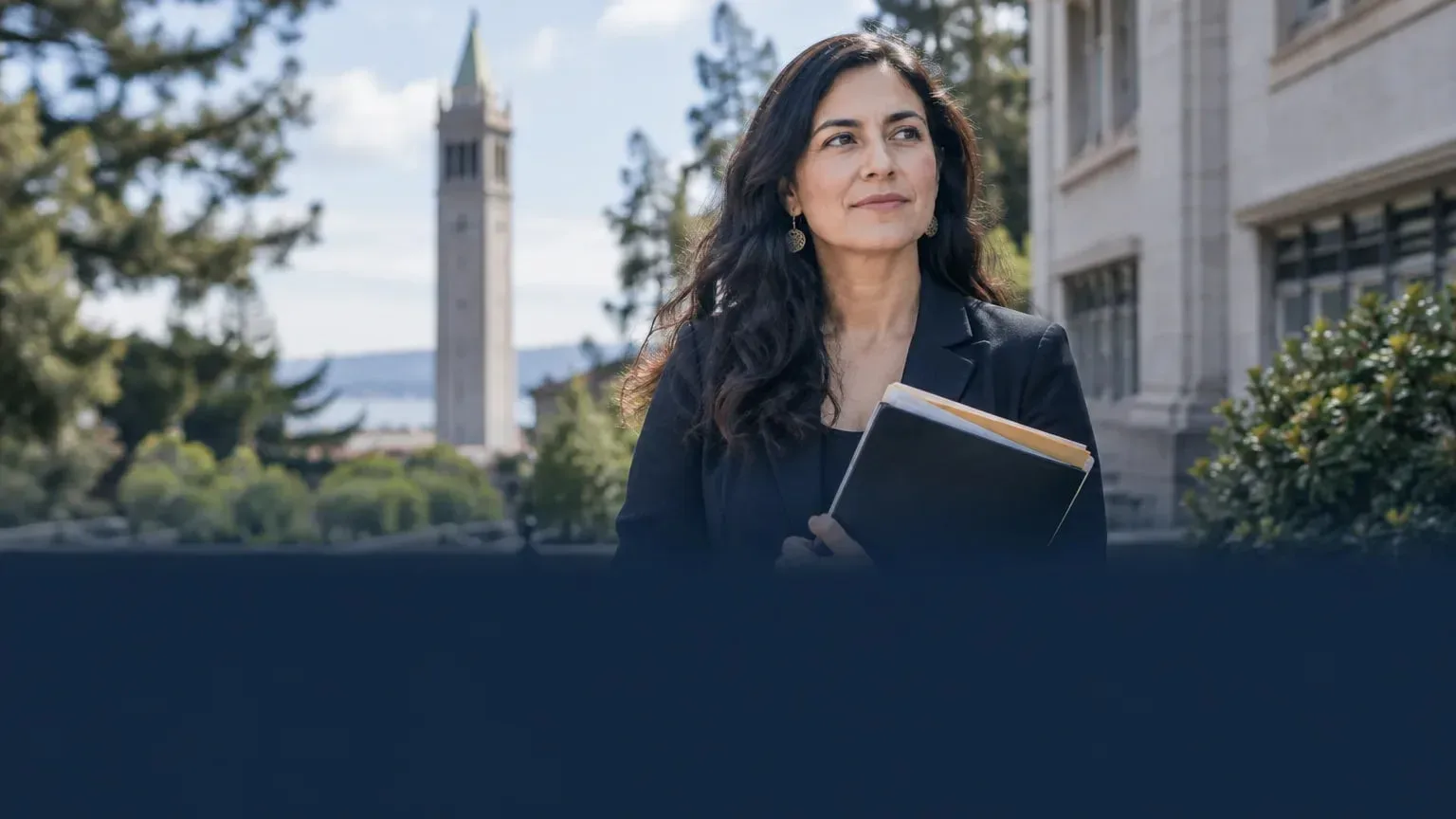
UC Berkeley sociology professor G. Cristina Mora says her scholarship is rooted in a personal sense that Latino communities were often sidelined in public life and media, and her work now focuses on how identity categories such as “Hispanic/Latino” formed and how they shape understanding of inequality, immigration and trust in government in the United States. The work matters because Mora argues that broad labels can reveal trends while also flattening major differences within Latino communities.
Key facts
- G. Cristina Mora is UC Berkeley’s Chancellor’s Professor of Sociology and co-director of the Institute of Governmental Studies.
- She says her research focus grew from her experience as the daughter of Mexican immigrants in a densely Latino area of Los Angeles.
- Her first book examined how the United States developed the category “Hispanic/Latino.”
- Mora’s work examines issues including inequality, immigration and trust in government among Latino communities.
- She says speaking about the “Latino vote” can identify trends but can also oversimplify a diverse population.
How did G. Cristina Mora’s research agenda take shape?
Mora traces the breakthrough behind her research to her own life and later academic experience. She grew up in Los Angeles as a Mexican American and the daughter of Mexican immigrants who worked in fields and then textile factories. She said that, despite living near the heart of California’s image-making industries, she did not see herself reflected in the “picture-perfect media of California and America.” She also recalled a period when California voters and politicians advanced harsh immigration policies, leaving her feeling that her community was being pushed aside, unrecognized and unwelcome.
She said a later move to the East Coast for graduate school sharpened those questions. There, Mora saw differences between Mexican communities and Puerto Rican and Caribbean Latino communities, even as all were grouped under a single label. That experience led her to ask how the “Hispanic/Latino” category emerged, what makes identity categories meaningful, and how new categories take hold over time.
What does her scholarship examine now?
Mora’s work focuses on Latino communities in the United States, with particular attention to how broad identity categories intersect with lived differences. UC Berkeley says her scholarship brings attention to a community she felt was often excluded. Her research addresses attitudes about inequality, immigration and trust in government.
The article says she studies those questions through both qualitative and quantitative methods. It describes her use of in-depth interviews and notes her role as co-director of UC Berkeley’s Institute of Governmental Studies, whose polling provides information about the priorities of voters across California.
What this means for students, researchers and the public
For students and researchers, Mora’s account offers a clear example of how personal experience can shape a sustained academic agenda without narrowing its scope. Her work connects biography, social categories and public opinion, showing how questions that begin in one community can lead to broader research on how the United States understands identity, politics and inequality.
Her comments also point to a practical research lesson: treating Latino communities as a single bloc may help identify some patterns, but it can also obscure differences shaped by gender, generation, nationality and region. For anyone studying politics, sociology or public policy, that means the next step is not simply to ask what “Latinos” think, but to ask which communities are being discussed and how their experiences differ.
- Who is affected: Students, researchers, policymakers and anyone trying to understand Latino public opinion in the United States.
- Why it matters: Mora says broad labels can both clarify trends and hide important differences within communities.
- Practical takeaway: Research and public debate should balance shared category labels with closer attention to internal diversity.
Why does Mora caution against treating the “Latino vote” as a single bloc?
Mora says the phrase can be useful for identifying broad political trends, but it also risks turning a diverse and dynamic set of communities into an overly simplified whole. She argues that a fuller understanding requires attention to how gender, generation, nationality and region shape different Latino communities in the United States.
That argument links her historical work on the Latino category to her more recent research on public opinion. In her view, the challenge is to hold onto both category and nuance at the same time. Only then, she says, is it possible to understand how different Latino communities are faring and what that reveals about the nation more broadly.
How does UC Berkeley frame her role?
UC Berkeley identifies Mora as a Berkeley alum, Chancellor’s Professor of Sociology and co-director of the Institute of Governmental Studies. The university’s profile says she learns resilience from students and sees them as a force that challenges the status quo and pushes faculty members to explain why research matters.
In that account, Mora says students press professors to clarify the stakes of scholarship and to make the case for social science in a changing world. She describes that environment as one that encourages intellectual courage and helps push research further.
FAQ
What is G. Cristina Mora’s research about?
Mora studies Latino communities in the United States, including how the “Hispanic/Latino” category developed and how issues such as inequality, immigration and trust in government are understood within those communities.
Why does she say the term “Latino vote” can be misleading?
She says the term can highlight important trends, but it can also oversimplify a diverse population by treating distinct communities as though they were a single political bloc.


