
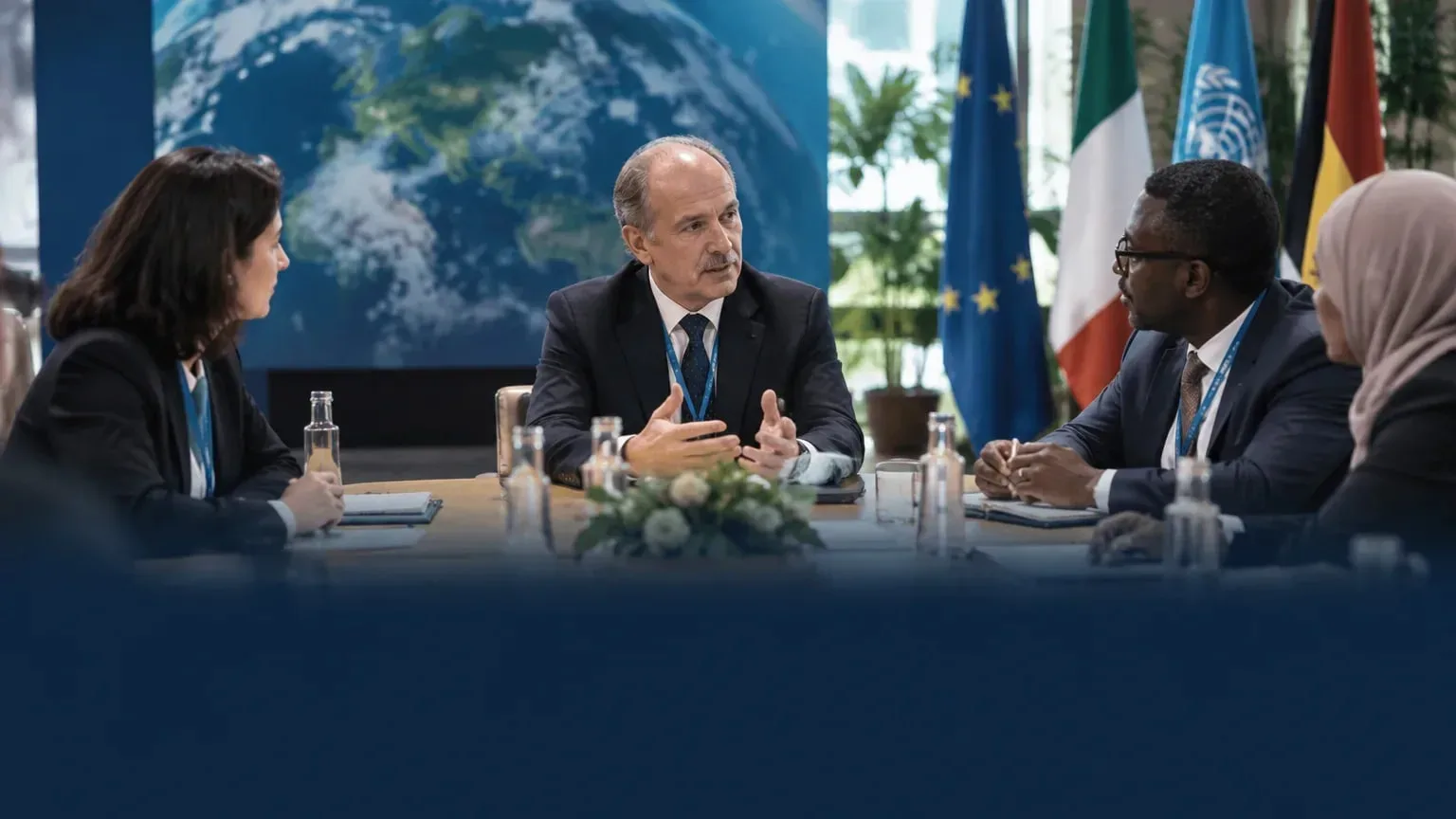
Higher education chief Erol Özvar met delegations from Science Europe, CGIAR, Libya and Somalia on as part of COP31, with the talks centered on scientific cooperation, joint research projects and stronger academic ties between universities. The meetings matter because they brought climate-focused cooperation, student mobility and research collaboration into a single higher education agenda.
Key facts
- Özvar met the Science Europe delegation, CGIAR Executive Managing Director Dr. Ismahane Elouafi, Libya’s Minister of Higher Education and Scientific Research, and Somalia’s Minister of Environment and Climate Change Bashir Mohamed Jama.
- Talks with Science Europe examined possible cooperation between Türkiye and research organizations in Europe.
- Discussions with Libya covered artificial intelligence, student mobility, special quotas for scholarship students and vocational education.
- Talks with Somalia focused on academic cooperation on climate change and postgraduate study opportunities for Somali students.
- Joint research projects that could include Turkish universities were discussed with CGIAR.
What was discussed at COP31?
The COP31 meetings covered several connected higher education and research issues rather than a single topic. Climate change, agriculture and food research, artificial intelligence, student mobility, scholarships and quotas, and joint academic projects were all part of the agenda.
According to the statement, the purpose was to develop international scientific cooperation and strengthen academic relations between universities. That meant engagement both with research organizations and with ministerial-level delegations.
What did Özvar discuss with European research bodies?
In his meeting with the Science Europe delegation, Özvar discussed potential cooperation between Türkiye and research organizations across Europe. The statement says Science Europe was founded in 2011 and is based in Brussels, bringing together organizations that support and conduct scientific research in Europe.
Özvar also gave information on the structure of the Turkish higher education system. He said universities in Türkiye carry out research, teaching and curriculum work within a framework of academic freedom and institutional autonomy. The statement also said Science Europe has strong institutional cooperation with the European University Association.
What do the Libya and Somalia talks mean for students?
For students, the most concrete elements of the Libya and Somalia meetings were the discussions on mobility and study opportunities. With Libya, the agenda included increasing the number of Libyan students in Türkiye, setting aside special quotas for students funded by the Libyan government, and involving visiting Libyan researchers in ongoing academic projects in Türkiye.
With Somalia, the talks focused on possible cooperation between higher education institutions on climate change and on creating opportunities for Somali students to pursue postgraduate education, especially in climate change. That moves the discussion beyond institutional contacts alone and toward possible pathways affecting admissions, scholarships, researcher participation and subject-specific graduate study.
Practical impact for students and researchers
The meetings are most immediately relevant for Libyan and Somali students who may study in Türkiye and for researchers who could join international academic projects. In the Libya talks, officials discussed increasing Libyan student numbers in Türkiye and allocating special quotas for students funded by the Libyan government. That indicates an institutional agenda around expanding scholarship-backed student mobility.
In the Somalia meeting, the discussion highlighted postgraduate opportunities in climate change for Somali students. The statement also said Turkish universities could support Somalia by sharing their scientific knowledge, research capacity and technological solutions. For prospective students and researchers, the clearest takeaway is not that new programs have opened, but that climate-related graduate study, mobility and research cooperation are active discussion areas.
- Libya-related topics included more Libyan students in Türkiye, special quotas for scholarship students, participation of visiting researchers in projects, academic cooperation in artificial intelligence and experience-sharing in vocational education.
- Somalia-related topics included university cooperation on climate change and postgraduate study opportunities for Somali students, especially in climate change.
- For researchers, the main themes were joint academic projects, agriculture and food research, and cooperation with international research networks.
No application calendar, program launch date or confirmed quota number was announced in the statement. What the meetings do establish is which areas may shape future institutional steps on student and researcher mobility.
What is included in the CGIAR cooperation agenda?
Özvar received CGIAR Executive Managing Director Dr. Ismahane Elouafi at the Council of Higher Education pavilion in the COP31 Blue Zone. The meeting addressed scientific cooperation in several fields, especially agriculture, with CGIAR described in the statement as a publicly supported organization working globally in agricultural innovation and agri-food research.
The two sides also discussed joint research projects that could include Turkish universities, along with possible cooperation between the Council of Higher Education and CGIAR. That shows the COP31 contacts extended beyond climate diplomacy alone into agriculture, food research and research infrastructure.
Frequently asked questions
Which institutions and delegations did Özvar meet at COP31?
Erol Özvar met the Science Europe delegation, CGIAR Executive Managing Director Dr. Ismahane Elouafi, Libya’s Minister of Higher Education and Scientific Research, and Somalia’s Minister of Environment and Climate Change Bashir Mohamed Jama.
What education topics were discussed with Libya?
The Libya meeting covered increasing the number of Libyan students in Türkiye, allocating special quotas for students funded by the Libyan government, involving visiting Libyan researchers in projects in Türkiye, academic cooperation in artificial intelligence and experience-sharing in vocational education.
What area stood out in the Somalia talks?
Academic cooperation on climate change was the main focus of the Somalia meeting. The talks also covered opportunities for Somali students to pursue postgraduate education, especially in climate change.


