
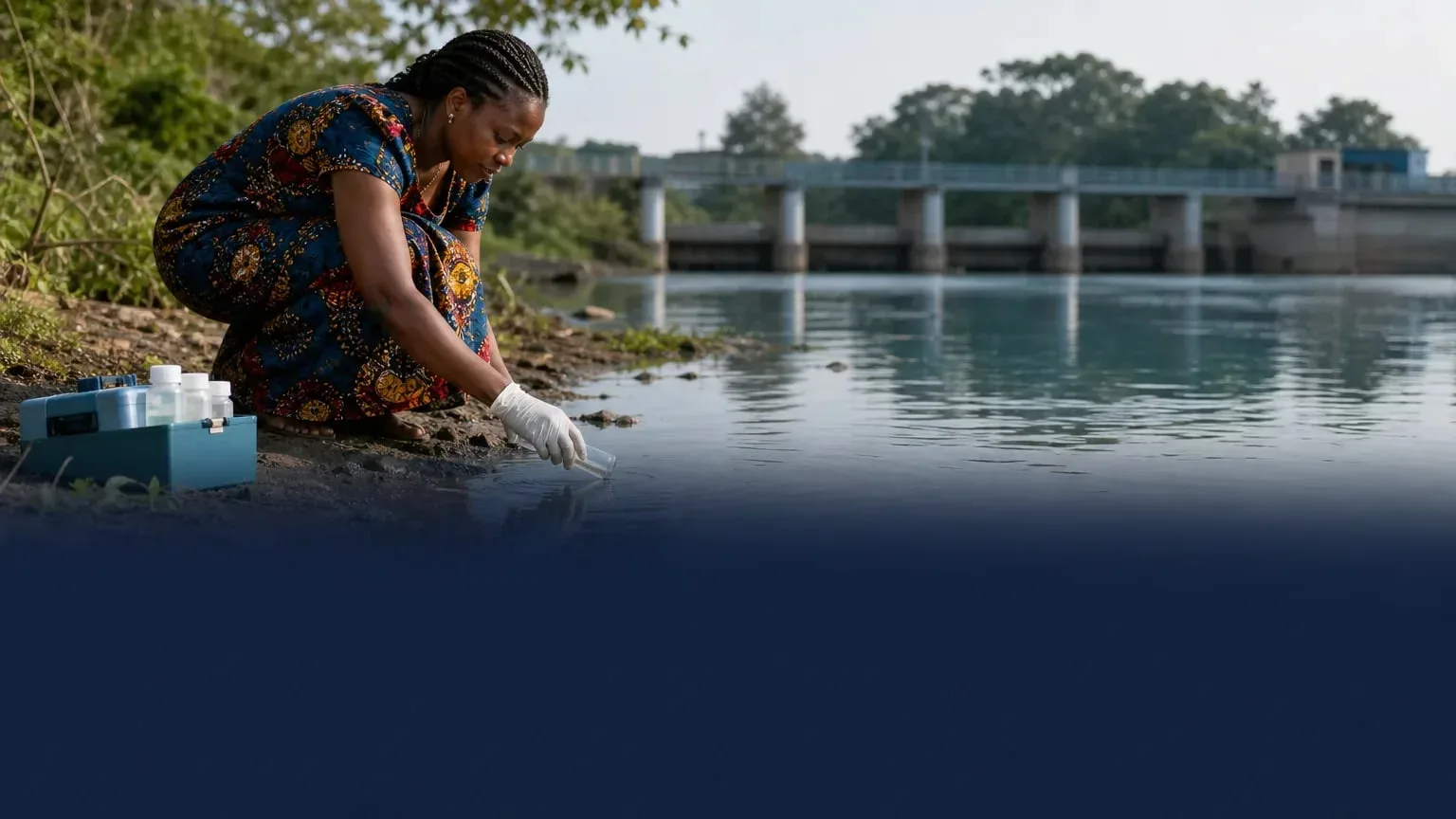
The German Institute of Development and Sustainability (IDOS) is accepting applications for a researcher in its Environmental Governance department, with the post based in Bonn and focused on water governance, water security, water politics and policy advice. The role is aimed at researchers who can work on low- and middle-income countries and, in some cases, conflict-affected settings.
Key facts
- The position is for a Researcher (m/f/diverse) in IDOS’s Environmental Governance research department.
- The job is based in Bonn, Germany, and starts from 1 January 2027.
- It is a 50% part-time role, equal to 19.5 hours per week, with a three-year initial contract.
- The application deadline is 7 October 2026 at 23:59 CEST.
- The work combines research, policy advice, networking, science communication and support for third-party funding applications.
What does this mean for applicants and early-career researchers?
The vacancy is most relevant to candidates with social-science training and research experience in water security topics. IDOS says a master’s degree is required, with a PhD preferred, and it is looking for people with publications or submission experience in areas such as water governance, groundwater, wastewater reuse, sanitation, water-related extreme events or transboundary water relations.
The post also has practical conditions that matter for applicants. The appointment is part-time at 19.5 hours per week, with mobile working possible from within Germany for up to 60% of the weekly time and at least 40% required in Bonn. The advertised salary follows the German public-sector scale, and the gross range for the 50% role is stated as about €31,250 to €48,000. Applicants who earned their degree outside Germany must attach the relevant Anabin database excerpt.
- Who fits best: researchers with backgrounds in social sciences, sustainability science, environmental governance, political ecology or related fields.
- What is valued: qualitative research experience, mixed methods, policy advice, science communication and third-party funding experience.
- Where it is based: Bonn, Germany, with some mobile work allowed from within Germany.
- When to apply: by 7 October 2026 at 23:59 CEST.
What will the researcher do?
The successful candidate will join IDOS’s water governance team and contribute to academic research, policy advice, networking and science communication. The institute says the post may also support applications for external research funding, especially for interdisciplinary and transdisciplinary projects.
The research agenda is broad but stays within water security and governance. Possible themes include surface and groundwater use, wastewater treatment and reuse, water-related extreme events such as flooding or drought, access to sanitation, and transboundary or multilateral water relations. IDOS says the work will place special emphasis on low- and middle-income countries.
What kind of background is IDOS looking for?
Applicants must have a strong academic and research profile. IDOS asks for a master’s degree in a relevant field such as social sciences, political science, economics, human geography, anthropology or sustainability science with a social-science focus. A PhD is preferred, but the posting also stresses research experience and peer-reviewed publication work.
The role also calls for experience with qualitative social-science methods and research or professional exposure in low- and middle-income country contexts. Strong conceptual skills in institutional analysis, multi-level environmental governance and political ecology are also highlighted, along with the ability to work independently, write for academic and policy audiences, and collaborate across disciplines.
How is the job structured?
The appointment begins on 1 January 2027 and is initially limited to three years, with a possible extension. IDOS says the position may also rise to 60% in 2028 and 2029 if the team secures third-party funding.
The advertised salary is based on Germany’s public-sector tariff scale, EG13 up to EG14 TVöD Bund, depending on qualifications. IDOS also lists benefits including flexible working hours, mobile working within Germany, a subsidised Deutschland-Job-Ticket, annual leave, a special annual payment, training opportunities and pension contributions through VBLU.
Frequently asked questions
Where is the IDOS researcher position located?
The role is based at IDOS in Bonn, Germany. IDOS says at least 40% of working time must be spent in person in Bonn, while up to 60% may be done through mobile working within Germany.
What is the deadline for applications?
Applications must be submitted by 7 October 2026 at 23:59 CEST. IDOS says interviews are expected on 3 November 2026.


