
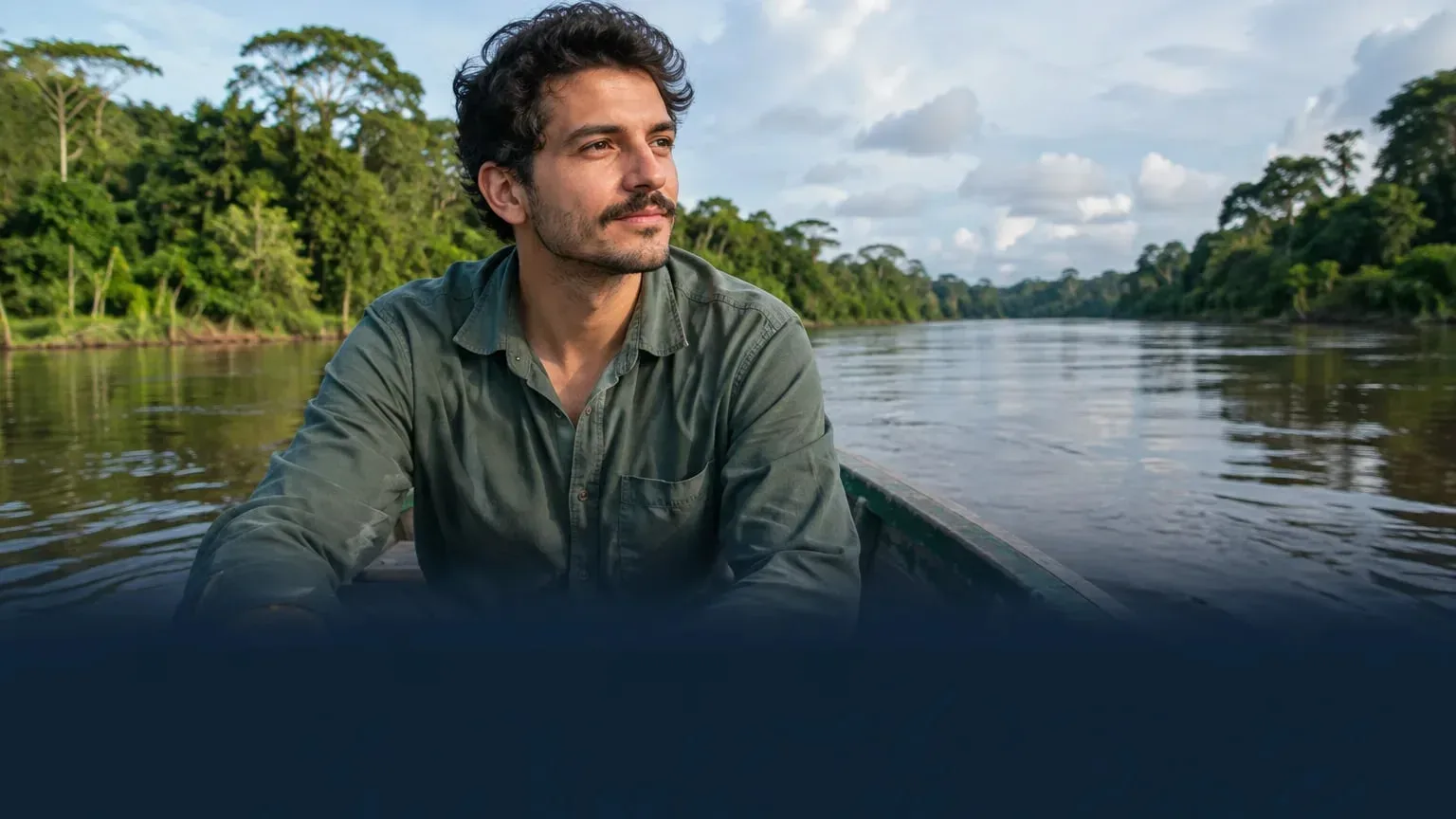
Manoel Rendeiro Neto has joined Yale’s Faculty of Arts and Sciences as an assistant professor of history, bringing a research agenda centered on the Pan-Amazonian region and the colonial history of Latin America. For students and scholars, his appointment matters because it adds new teaching and research on Amazonian history, environment, labor, and sovereignty, including a planned undergraduate seminar focused on the rainforest across nine South American countries.
Key facts
- Neto is a new assistant professor of history at Yale’s Faculty of Arts and Sciences.
- His research focuses on the history of the Pan-Amazonian region and the colonial history of Latin America.
- He came to Yale a year earlier as a postdoctoral associate and lecturer in history and as an affiliate fellow in the Program in Agrarian Studies.
- He is teaching a lecture on environmental insurgency, dispossession, and slavery in Latin America, and plans to teach a Pan-Amazonian history seminar next semester.
How did Manoel Rendeiro Neto’s background shape his scholarship?
Neto traces his intellectual focus directly to where he grew up. He is from Pará in the Brazilian Amazon, and his roots are in São Caetano de Odivelas, a mangrove town where many relatives worked in fishing. He said his memories include Belém’s Ver-o-Peso market, where grandparents and other family members sold crab and fish by Guajará Bay.
He said he decided as an undergraduate at the University of Brasilia to study history, especially the history of the Amazon region. He described that choice as a way to sustain his connection to the region and to family and friends there. That connection remained central when he moved to the United States for doctoral study at the University of California, Davis.
Neto now returns to Brazil once or twice a year, and he highlighted Marajó Island in Pará as one of his favorite places to revisit. He described its meeting of sea and river as part of what draws him to the region’s dynamics and what shapes his scholarship.
What will Yale students be able to study with him?
Students can already encounter Neto’s work in the classroom. This semester he is teaching a lecture course titled “Environmental Insurgency, Dispossession and Slavery in Latin America,” which he described as an overview of colonial history in Latin America.
Next semester, he plans to teach an undergraduate seminar called “A Pan-Amazonian History of a Rainforest.” He said the course will examine the history, culture, and economic dynamics of the nine South American countries that are part of the Amazon ecosystem. That signals a regional approach that goes beyond one nation and frames the rainforest as a shared historical space.
What this means for students and researchers
For Yale students interested in Latin American history, environmental history, colonialism, or the Amazon, Neto’s arrival expands course offerings in those areas. The evidence shows one current lecture course and one planned undergraduate seminar, giving students both a broad colonial history option and a more specialized course on the Pan-Amazonian world.
The planned seminar may be especially relevant for undergraduates seeking a cross-border view of the rainforest. Neto said it will cover the history, culture, and economic dynamics of the nine South American countries that are part of the ecosystem, which suggests a framework useful to students working across history, regional studies, and environmental questions.
- Who is affected: Yale students, especially those studying history, Latin America, colonialism, and environmental themes.
- Current course: “Environmental Insurgency, Dispossession and Slavery in Latin America.”
- Next course: “A Pan-Amazonian History of a Rainforest,” planned for next semester.
- Research relevance: Neto’s work connects environment, labor, sovereignty, and colonial history in the Amazonian region.
His book project examines environment, labor, and sovereignty
Neto said he is working on a book titled Imperial Tides, Insurgent Rivers: Environment, Labor, and Sovereignty in the Atlantic Amazonia (1750-1850). He said the manuscript examines how Indigenous and Afro-descended communities used environmental knowledge during the 18th and 19th centuries in that region.
He also said the book addresses debates about deforestation and environmental destruction in that period, while stressing that today’s concept of the environment did not yet exist in the same way. His approach, he said, considers the perspectives of communities whose relationships with nature may have differed from later frameworks.
One case study he highlighted concerns Portuguese colonizers using Indigenous people as botanical smugglers to secure acclimated South Asian spices such as clove from La Gabrielle, a French botanical garden and spice plantation in the Guianas. Neto said the site had once been cultivated by a self-emancipated enslaved community and later became the model for botanical gardens in Brazil. For his research, that example opens a broader historical question about the meanings of forest, garden, and plantation in the early modern period.
Life in New Haven and ties to Brazil
Alongside his academic work, Neto described routines that place him in New Haven while keeping strong links to Brazil. He said he lives in East Rock and spends time in East Rock Park. He also mentioned Hanmi on State Street, The Coffee Pedaler, East Rock Breads, and the farmers market in Wooster Square as favorite local stops.
Food also appears in the way he talks about memory and culture. He described making moqueca, a Brazilian fish or seafood stew associated with Bahia, using ingredients including coconut oil, palm oil, peppers, onions, tomatoes, and herbs. That interest fits with his stated habit of thinking about food history and food culture.
FAQ
What does Manoel Rendeiro Neto study at Yale?
He studies the history of the Pan-Amazonian region and the colonial history of Latin America as an assistant professor of history at Yale.
What courses is he teaching or planning to teach?
He is teaching “Environmental Insurgency, Dispossession and Slavery in Latin America” this semester and plans to teach “A Pan-Amazonian History of a Rainforest” next semester.


