
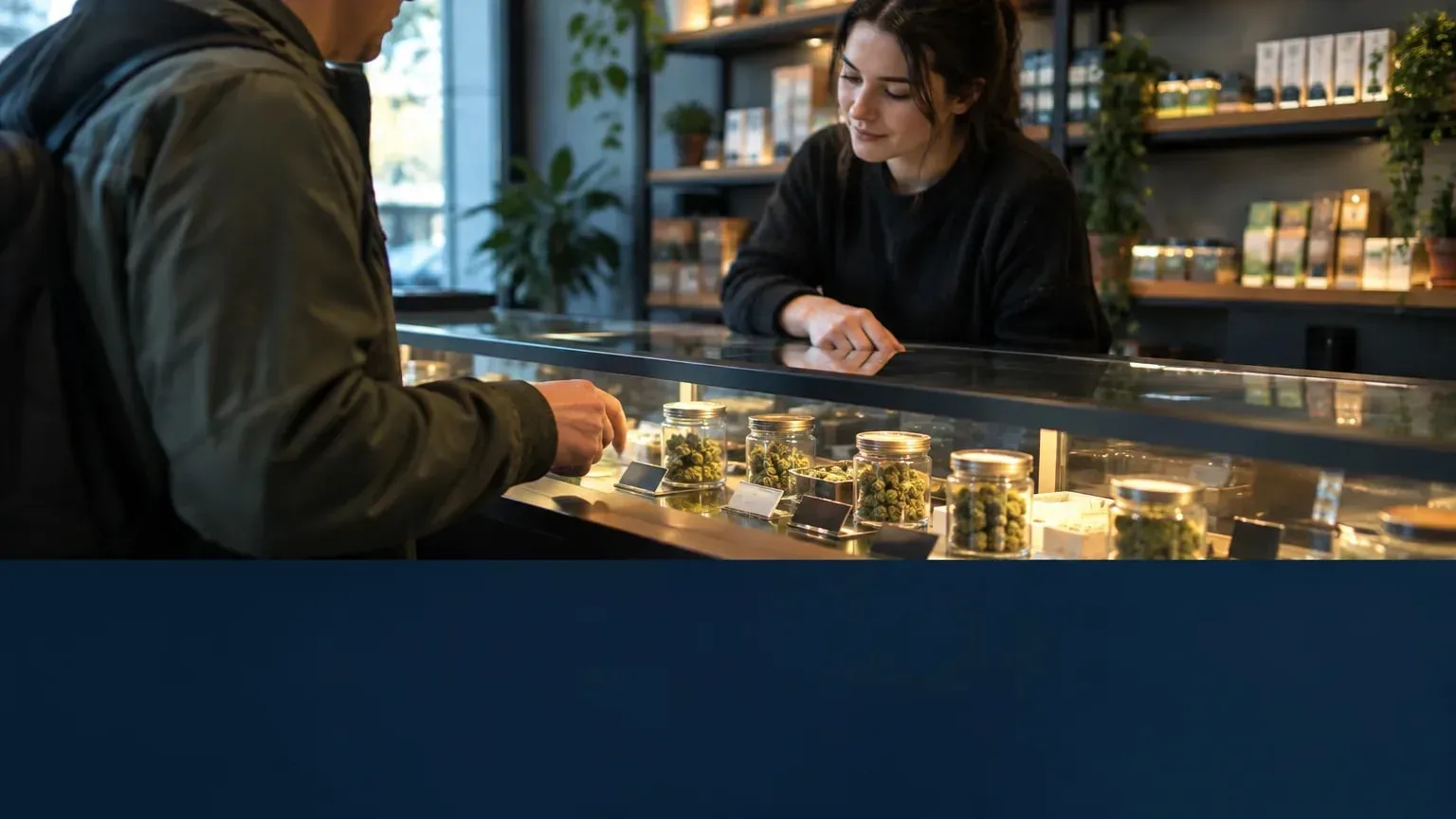
Retailers facing a new competitor nearby tend to lower prices and change what they stock, according to a working paper highlighted by Yale School of Management on November 9, 2026. Using Washington State’s 2014 cannabis retail licensing lottery, researchers isolated how local competition affected nearly 400 stores, finding that the effect was highly local and mattered most when rivals were very close.
Key facts
- Washington State’s 2014 cannabis retail license lottery created a natural experiment by assigning some proposed stores more nearby competitors than others through chance.
- The researchers tracked nearly 400 cannabis retailers over time using Washington’s transaction monitoring system.
- Stores with a nearest rival within 0.2 kilometers charged markups about 9% below stores whose nearest competitor was more than 2.5 kilometers away.
- The pricing effect largely disappeared once a competitor was roughly 1 kilometer away.
- A simulation found that allowing 10% more cannabis retail licenses statewide would reduce markups by 1.4% and produce roughly $7.6 million in annual consumer savings.
What did the study find about nearby retail competition?
The study found that local competition reduced markups and pushed retailers to differentiate their assortments. The strongest price effect appeared when the nearest competitor was within 0.2 kilometers, and it faded quickly with distance, essentially disappearing once a rival was pushed to around 1 kilometer away. Researchers also found that one or two nearby competitors accounted for most of the markup decline, while additional rivals had little extra effect.
The analysis relied on a rare setting in which store locations were proposed before Washington awarded licenses by lottery. That meant otherwise similar neighborhoods could end up with different numbers of licensed competitors for reasons unrelated to demand, business quality, or capital. The paper says this randomness helped isolate competition’s effect from the usual factors that make real-world retail markets hard to study.
The research was conducted by Yale SOM’s Kosuke Uetake with Brett Hollenbeck of UCLA and Sylvia Hristakeva of Cornell, according to the Yale account of the working paper.
Why Washington State’s cannabis market gave researchers unusual evidence
Washington launched one of the first legal recreational marijuana markets in the United States in 2014. In places where applications exceeded available licenses, the state used a lottery rather than selecting operators based on merit or business plans. That created the basis for what the researchers described as a near-natural experiment on local competition.
Washington also monitored and taxed every legal marijuana sale, producing unusually detailed data. According to the Yale account, that let the researchers map exact markups and observe how pricing and product mix changed over time as competitive conditions shifted.
The article says that level of tracking is uncommon in other regulated sectors, which can leave policymakers with less evidence when setting or maintaining license caps.
What this means for businesses, regulators, and consumers
For retailers and other businesses in regulated local markets, the paper points to two practical competitive responses: cutting prices and changing assortments. The findings suggest that a nearby rival does not just pressure a store to lower markups; it can also lead the store to expand and reshape its shelf offerings so that it overlaps less with the competitor.
For consumers, the study links greater local competition to lower prices and more choice. In the researchers’ simulation, increasing cannabis retail licenses by 10% statewide would lower markups by 1.4% and expand existing stores’ assortments by about 8%. The Yale account says this would translate into roughly $7.6 million in annual consumer savings, with the effect nearly doubling in Seattle, described as the state’s largest and densest market.
- Businesses: Assortment strategy can be a tool for reducing direct price pressure from close rivals.
- Regulators: License caps in cannabis and other markets may carry measurable consumer costs.
- Consumers: More nearby competition may mean lower prices and broader selection, especially in denser markets.
How did stores change products as well as prices?
Retailers did not respond only by cutting markups. The study found that stores facing nearby competitors carried more products and made their selections less similar to those of the specific rival. The closer two competitors were, the less alike their shelves became.
That differentiation also mattered for pricing. When two nearby retailers sold the exact same product, the markup on that product faced more pressure than would be expected from competitor presence alone. In other words, similarity in what stores stocked intensified direct price competition.
What are the broader policy implications?
The Yale account says the findings may matter beyond cannabis because states also use license caps in markets such as liquor, pharmacies, and tobacco retail. The paper argues that detailed monitoring systems can help regulators estimate how consumers and firms respond to restrictions on competition, rather than relying on assumptions.
It also suggests that the consumer effects of license caps are not uniform across space. Because the strongest competitive effects were concentrated at short distances, changes in licensing may have larger practical consequences in dense urban markets than in more spread-out areas.
FAQ
How much did nearby competition affect prices?
According to the study, retailers whose nearest rival was within 0.2 kilometers charged markups about 9% lower than retailers whose nearest competitor was more than 2.5 kilometers away. The effect largely disappeared once a competitor was roughly 1 kilometer away.
What did the simulation say about adding more licenses?
The researchers estimated that allowing 10% more cannabis retail licenses statewide in Washington would reduce markups by 1.4%, generate roughly $7.6 million in annual consumer savings, and increase existing stores’ assortments by about 8%.


