
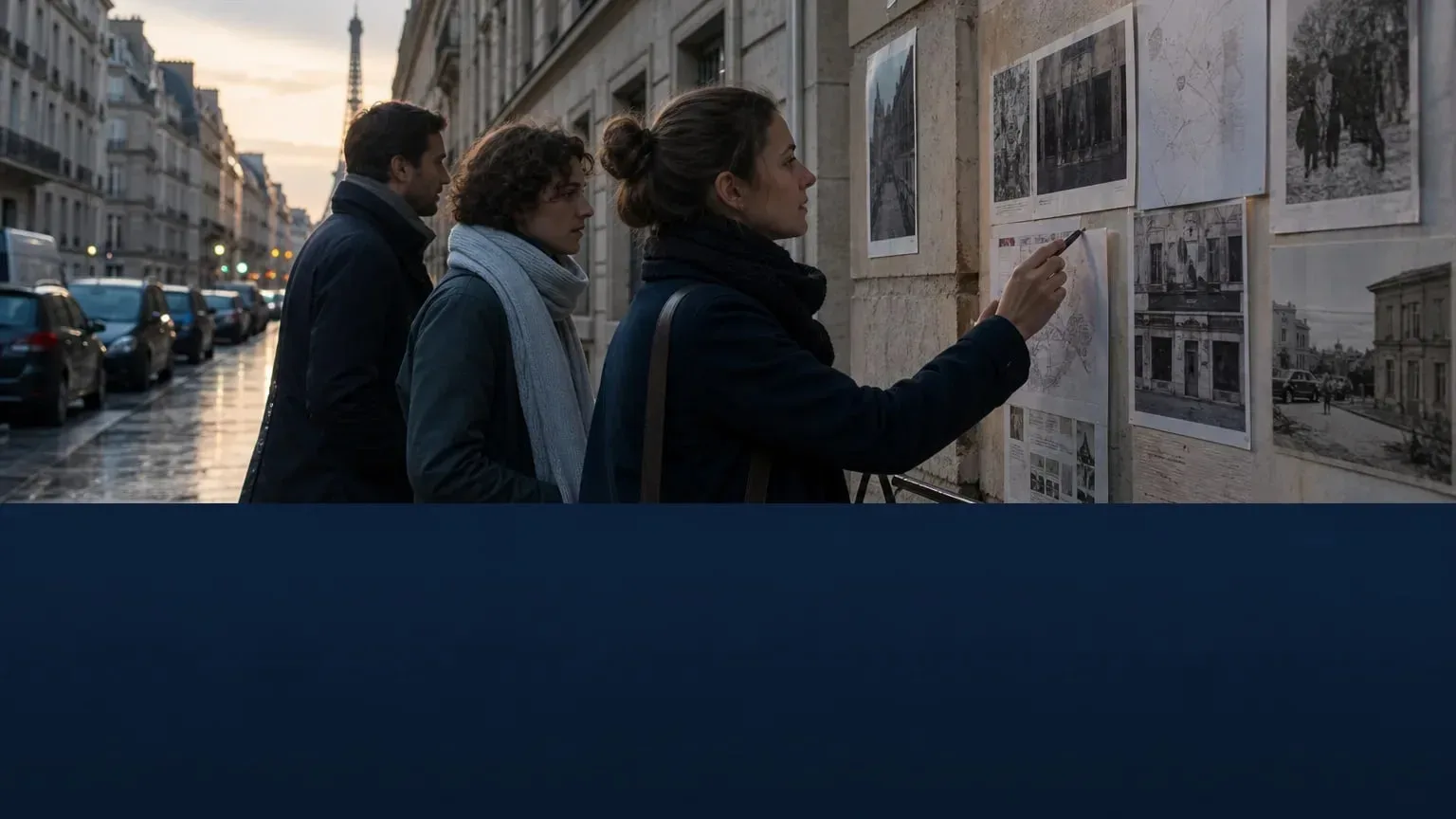
An in-person workshop at the University of Toronto’s Munk School will bring together three PhD researchers who received short-term doctoral research grants from the Centre for the Study of France and the Francophone World. The November 11 event will feature fieldwork dispatches on Cistercian monastic art, contested Caribbean island histories and Proust’s Paris.
Key facts
- The event is scheduled for November 11, 2026, from 2:00 p.m. to 4:00 p.m.
- It will take place in Room 108, North House, at the Munk School, 1 Devonshire Place, in Toronto.
- The workshop features awardees of short-term doctoral research grants from the Centre for the Study of France and the Francophone World.
- Speakers are Jamie Collings, Heywot Tadesse and Fan Xu, all University of Toronto PhD researchers.
What does this mean for PhD students at the University of Toronto?
The event highlights a grant program that supports University of Toronto PhD students pursuing field research in France and the Francophone world. The workshop gives the 2026 awardees a public platform to present what they found and how their projects connect to questions about place, memory and historical change.
For graduate researchers, the practical takeaway is that the Centre for the Study of France and the Francophone World backs short-term doctoral fieldwork and then brings awardees together for a shared presentation format. The speakers’ projects show the range of work the grants can support, from medieval monastic architecture to early modern Caribbean provisioning and literary geography in Paris.
- Who is affected: University of Toronto PhD students pursuing research tied to France or the Francophone world.
- What is on offer: short-term doctoral research grants.
- Where the work can lead: field research presentations at the Munk School.
- Event format: in-person workshop.
What will the speakers present?
Jamie Collings will present “Tiles, masonry, and grisaille: abstract geometricity in French Cistercian art and architecture,” drawing on work related to monasticism and art history. Heywot Tadesse will discuss ““Cette île quoique fort belle et grande n’est néanmoins point habitée”: Inhabited islands, contested hospitalities, and narratives of extinction in the history of the seventeenth-century Eastern Caribbean,” centered on early modern Caribbean history. Fan Xu will present “In Search of Lost Space, Proust’s Paris in 2026,” linking literary inquiry with critical philosophy and comparative cultural study.
Why are these projects grouped together?
The workshop’s framing ties the three projects together through the idea of “particular Francophone places” that gather meaning over time and can later become contested or “lost.” The event description links monasteries, islands and Paris streets as sites where history, literature and material culture overlap.
That structure makes the session more than a standard research showcase. It turns the three presentations into a conversation about how places are remembered, reinterpreted and disputed across different periods and archives.
Who is organizing and where should attendees go?
The event is sponsored by the Centre for the Study of France and the Francophone World, the Centre for European and Eurasian Studies, and the Munk School. It is listed for attendance in person at the Centre for European and Eurasian Studies and the Centre for the Study of France and the Francophone World at the Munk School, 1 Devonshire Place, Toronto.
For attendance details, the listing provides the contact address munkschool.centres@utoronto.ca.


