
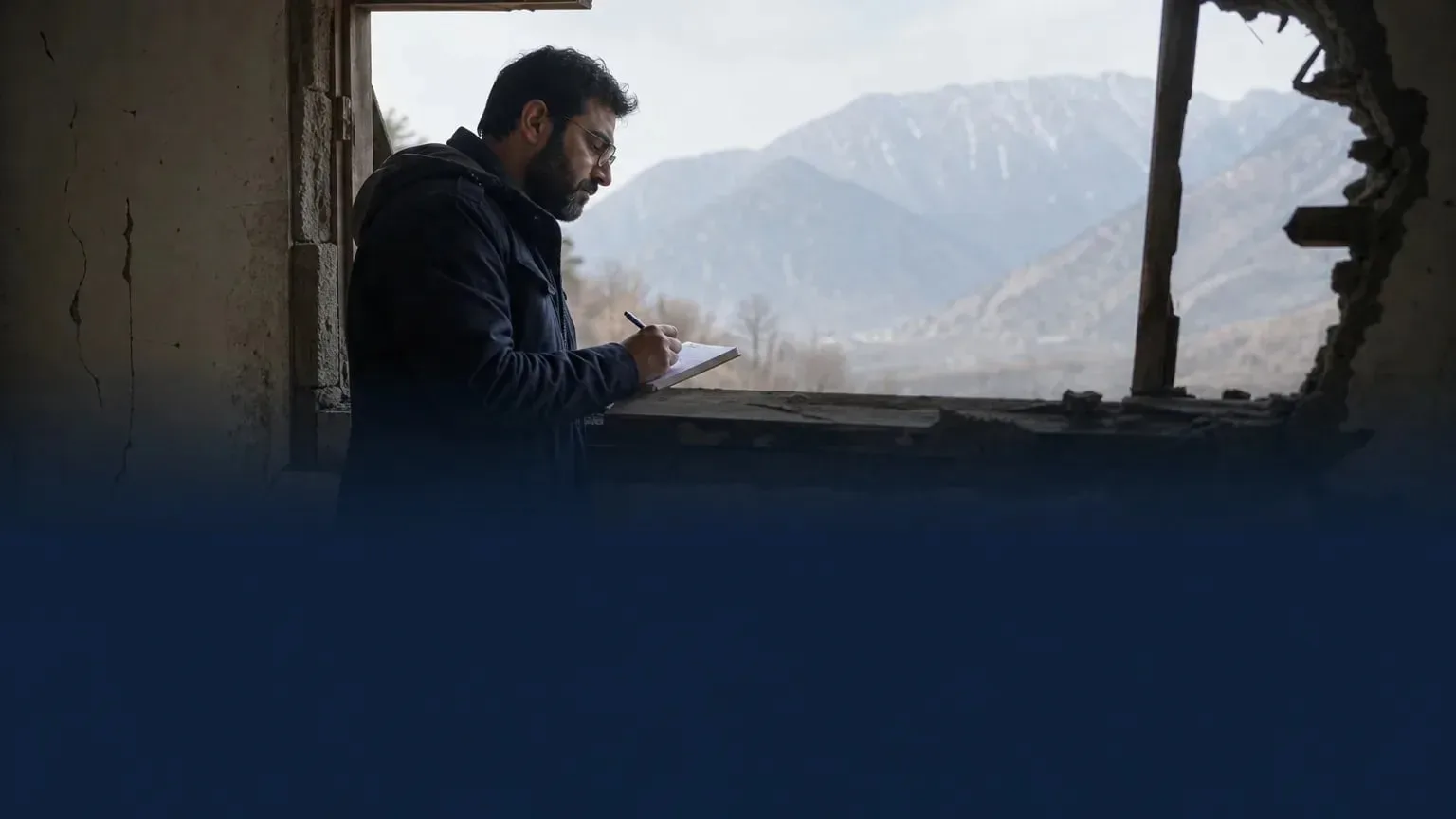
Dr Omer Aijazi, Senior Lecturer in Disasters and Climate Crisis at the Humanitarian and Conflict Response Institute (HCRI) at The University of Manchester, has won the Bloomsbury Pakistan Book Prize for Atmospheric Violence: Disaster and Repair in Kashmir. The award adds to growing recognition for a book that examines how people live with violence, care and repair in Pakistan-Administered Kashmir.
Key facts
- Dr Omer Aijazi received the Bloomsbury Pakistan Book Prize.
- The winning book is Atmospheric Violence: Disaster and Repair in Kashmir.
- The monograph was published in 2024 by the University of Pennsylvania Press.
- The University of Manchester says the book has now received six international accolades.
- The prize recognises scholarship that deepens understanding of Pakistan and South Asia.
What does this mean for students and researchers?
The award highlights research that crosses disaster studies, ethnography, South Asian studies and social justice. For students and early-career researchers, it shows that work combining careful field research with strong conceptual framing can gain international recognition when it addresses urgent questions about conflict, ecology and everyday life.
It may also be relevant for people interested in open-access academic publishing. The university says the book is available to read in open access, which broadens access for readers who want to engage with the research without a paywall.
- Author: Dr Omer Aijazi
- Institution: Humanitarian and Conflict Response Institute, The University of Manchester
- Award: Bloomsbury Pakistan Book Prize
- Book: Atmospheric Violence: Disaster and Repair in Kashmir
What did the prize jury recognise?
The jury praised Aijazi’s “cutting-edge experimentation with scholarly narrative,” and said the book was rooted in compassionate ethnographic research and attentive to the emotional terrain of Kashmir. It described the work as an ethnography of life in ecologically fragile, militarised borderlands, and said it offered both a methodological and conceptual innovation.
The prize is presented for academic books that make original contributions to the study of Pakistan and South Asia, including history, politics, society, economy and culture. According to the university, the award underscores the book’s influence across scholarship on South Asia, disasters, ethnography and social justice.
Why does the book matter in disaster studies?
Atmospheric Violence challenges approaches that treat disasters as isolated events or moments of direct physical trauma. Instead, it presents violence as an ongoing condition woven into everyday life, alongside military checkpoints, no-go zones and fractured landscapes.
The book also centres friendship, kinship, care and repair as practices that make life possible amid continuing violence. That framing helps explain why the work has drawn attention beyond a single disciplinary field and why the university says it has now accumulated six international accolades.
Is the book available to read?
Yes. The University of Manchester says Atmospheric Violence: Disaster and Repair in Kashmir is available to read in open access, giving readers free access to the monograph.


