
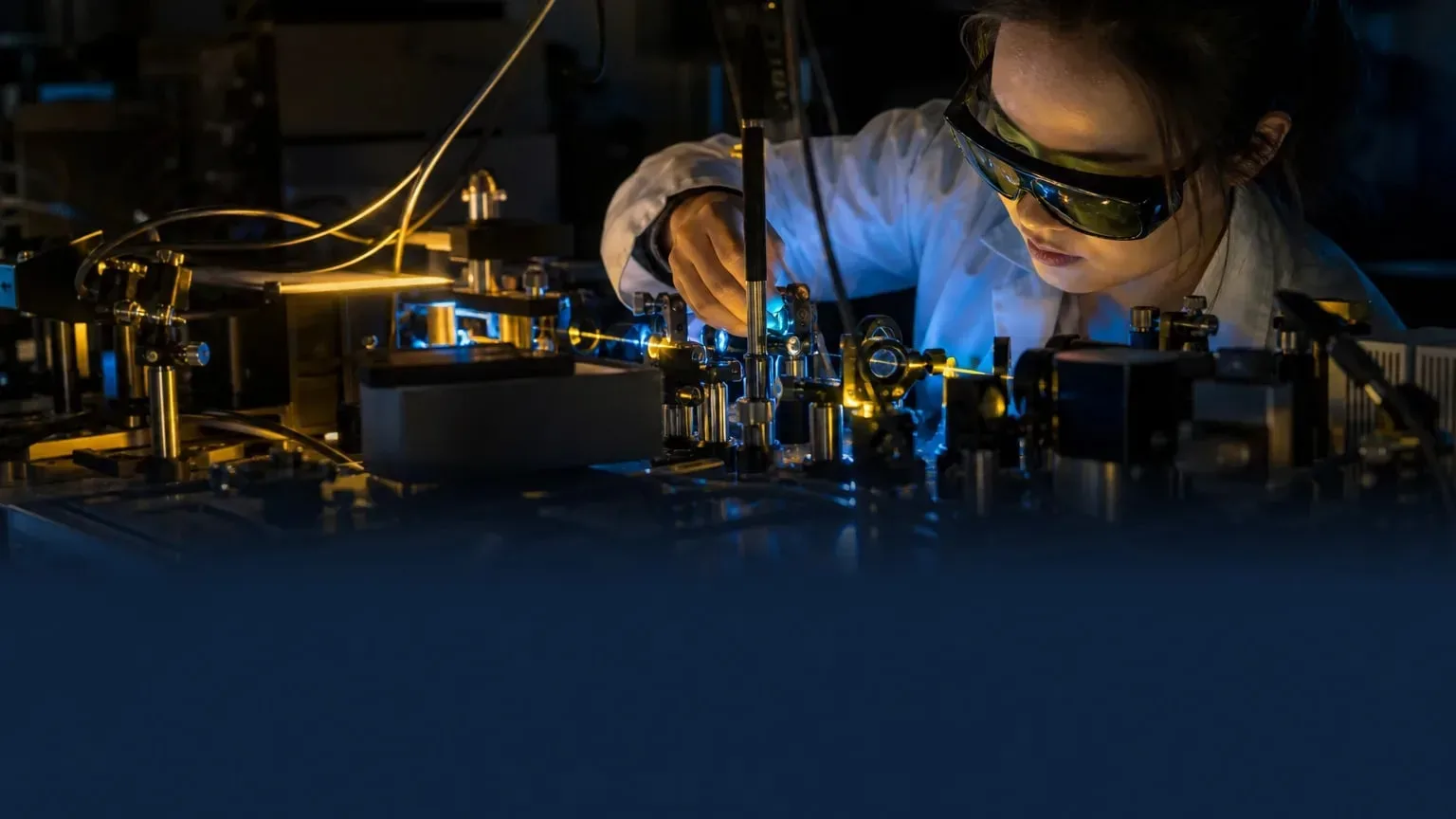
A University of Washington-led optoelectronics center has received a second round of funding from the U.S. National Science Foundation, extending work on materials and devices that blend light and electronics. The award keeps the NSF Center for Integration of Modern Optoelectronic Materials on Demand, or NSF IMOD, going for another five years and supports research with potential uses in displays, secure communications and future computing.
Key facts
- NSF IMOD was founded in 2021 as an NSF Science and Technology Center.
- The new award extends the center’s work for five more years.
- NSF is expected to provide $22 million over the five-year term.
- The center includes researchers from 14 U.S. universities, led by the University of Washington.
- Current research includes quantum dots, optical quantum communication links and optoelectronic materials for information technology.
What does this mean for students and trainees?
The renewed funding keeps intact a training pipeline that reaches graduate students, undergraduates and younger learners. NSF IMOD trainees take part in a weeklong summer course at UW that spans chemical synthesis, quantum mechanics, molecular theory and hands-on work such as thin-film light-emitting diode fabrication and testing.
Students in the program also gain experience beyond the lab. The center offers internships with industry and national lab partners, a Research Experience for Undergraduates program, and outreach training that prepares trainees to serve as Quantum LEAP ambassadors. NSF IMOD has also built a quantum education portal for K-12 teachers, widening its impact beyond the university setting.
- Graduate trainees: cross-disciplinary technical training and internships.
- Undergraduates: REU placements and summer research experience.
- K-12 educators and students: lesson plans and outreach materials through the education portal.
Why does NSF IMOD matter now?
NSF IMOD is designed to connect chemistry, physics, engineering and materials science around a common goal: creating new optoelectronic materials on demand. That work matters because the technologies involved could influence how information is displayed, transmitted and processed.
Center director David Ginger said the goal is to tackle problems too large for one researcher or even a small group to solve alone. The center says it has already shown that quantum dots can be printed into specific cavities, a step it describes as important for future quantum communication and possibly quantum computing.
What has the center achieved so far?
Over the first five years, NSF IMOD says it published 140 papers, hosted 36 undergraduate students through its REU program and held more than 85 outreach events. The center also reports that its students have been hired by startup companies and large semiconductor firms for the skills they learned there.
The research team has focused on quantum dots, tiny materials that produce specific colors of light depending on their size. The center says it developed a way to print quantum dots like an inkjet process and place them into designated cavities, moving them from a chemistry-lab material into a possible component in optoelectronic circuits.
Who is involved in the center?
NSF IMOD brings together 14 universities across the U.S., including the University of Washington, UC Berkeley, Columbia University, the University of Chicago, Northwestern University, the University of Pennsylvania, the University of Maryland, Georgia Tech, the University of Colorado Boulder, Arizona State University, Rice University, Lehigh University, City College of New York and the University of Maryland, Baltimore County.
At UW, the center involves faculty and researchers from chemistry, physics, electrical and computer engineering, mechanical engineering and materials science. UW faculty named in the announcement include David Ginger, Kai-Mei Fu, Brandi Cossairt, Lih Lin, Devin MacKenzie and Arka Majumdar.
What happens next?
With the second NSF award, the center plans to continue refining quantum dots and the cavities they are placed into over the next five years. Ginger said the longer-term vision includes photonic computing that could reduce the energy cost of computation, though he described that as a goal still a decade or more away.
The award keeps the collaboration moving at a time when researchers are trying to turn basic materials science into devices that could affect communications, displays and semiconductor technology.


