
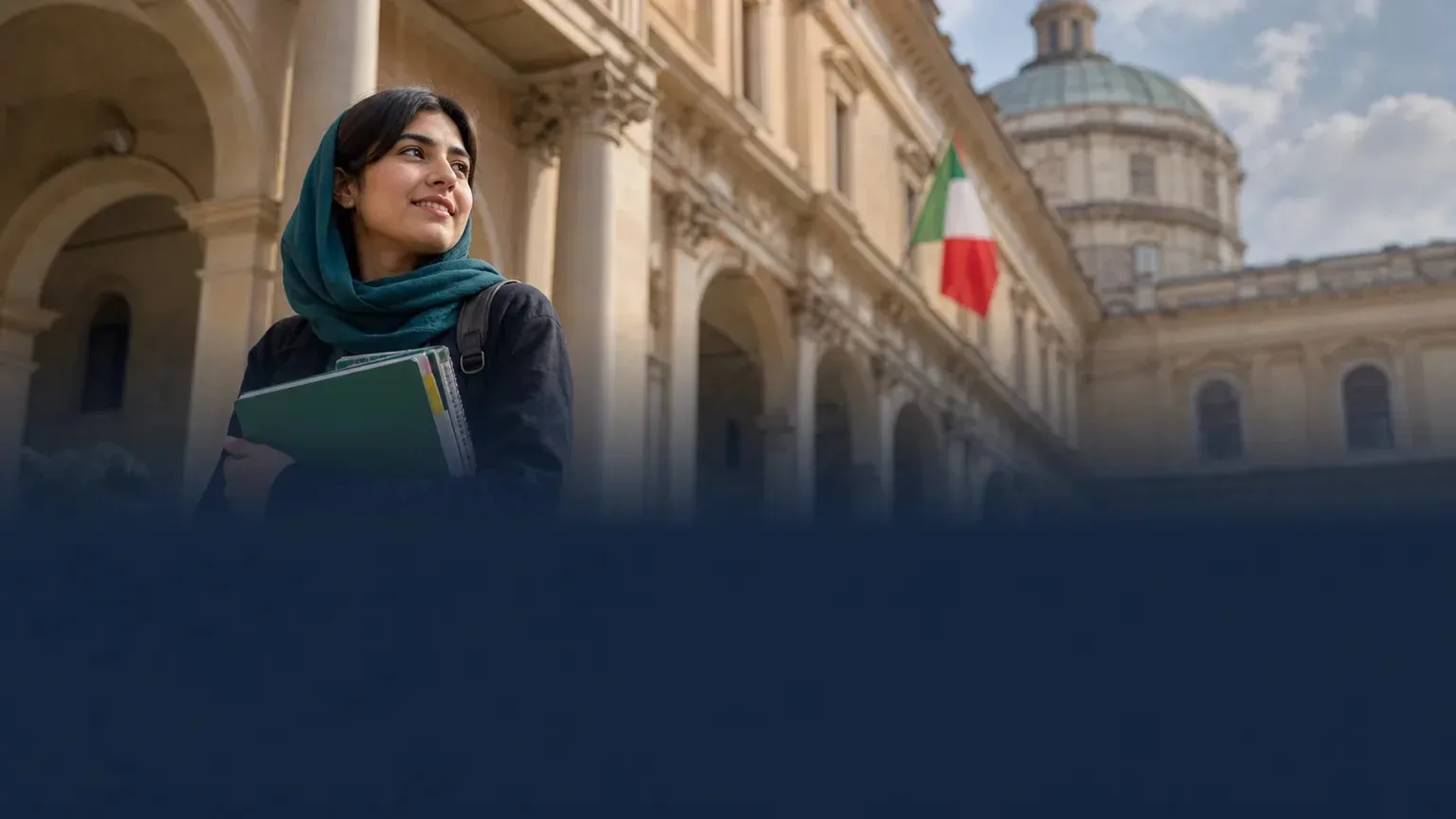
Pakistanis planning for 2027 study options in Italy can apply to public universities for bachelor’s and master’s degrees, but the process now hinges on a stricter financial proof rule, university-specific admissions and regional scholarship deadlines. Public tuition is often low by European standards, and some students can also seek need-based regional aid that may cover tuition, cash support and accommodation.
Key facts
- Public university tuition in Italy often ranges from €150 to €4,000 per year.
- Pakistani students can apply for bachelor’s and master’s programmes at Italian public universities.
- Regional scholarships may include tuition exemption, cash support, subsidised accommodation and canteen services.
- For academic years 2026/2027 and 2027/2028, the minimum means of subsistence for visa purposes is €10,179.85 a year.
- Non-EU applicants must complete Universitaly pre-enrolment before moving to the visa stage.
What this means for Pakistani students
For applicants from Pakistan, the biggest practical change is the financial evidence required for an Italian study visa. The circular cited in the evidence raises the minimum means of subsistence to €10,179.85 for 2026/2027 and 2027/2028, and applicants are expected to show funds with a clear legal source and at least six months of account history.
Students also need to plan around several separate steps: university admission, document legalisation, Universitaly pre-enrolment, and the visa application. The evidence says many public universities open international admission rounds between December and April for September intake, while regional scholarship deadlines often close in late August or early September. That makes early document preparation important for students who want to combine admission, scholarship and visa timelines.
- Choose the university and programme first, since admission letters are needed before later steps can begin.
- Prepare attested and apostilled academic and family documents early for recognition and scholarship filings.
- Check whether your course requires IELTS, TOEFL, TOLC, IMAT, GRE or GMAT.
- Use a confirmed scholarship award letter only if you want it counted as financial support for the visa file.
How do Pakistani students apply to Italian universities?
They apply directly through the university’s own portal, not through a national admissions system. The evidence says applicants can usually apply to several institutions at once, and admission requirements depend on the degree level, programme language and course-specific tests.
For bachelor’s programmes, the evidence lists Matric and Intermediate or A-Levels as the typical academic background. For master’s programmes, it lists a 16-year bachelor’s degree. English-taught programmes commonly ask for IELTS 6.0–6.5 or TOEFL 79+, while Italian-taught degrees often require B1–B2 Italian and sometimes a CILS or CELI certificate.
Why does document legalisation matter?
Because Pakistani qualification documents must be recognised for Italian study and visa processing. The evidence says students need IBCC attestation for Matric and Intermediate certificates or HEC attestation for degrees and transcripts, followed by an apostille from Pakistan’s Ministry of Foreign Affairs. Some non-academic documents, such as a NADRA birth certificate, also need a MoFA apostille.
After that, students need a recognition document showing that their qualification is comparable to an Italian one. The evidence identifies two routes: a CIMEA Statement of Comparability, which is described as faster, or a Declaration of Value issued by the Italian Embassy in Islamabad. The article evidence says applicants should check which one their university wants before starting.
What scholarship options are available?
Regional right-to-study agencies in Italy offer need-based scholarships that can help reduce living and tuition costs. The evidence names EDISU Piemonte, ER-GO, DSU Toscana, LazioDisco and ERSU as examples. A typical package may include a cash stipend, full tuition exemption, subsidised accommodation and canteen access.
Eligibility is tied mainly to the ISEE Parificato, which assesses a student’s family economic situation. The evidence says applicants need family composition, income, property and bank documents for household members, translated into Italian and apostilled, then processed through a CAF office in Italy. Regional thresholds usually fall between €25,000 and €27,000, and scholarship renewal depends on earning a set number of CFU credits each year.
What happens after admission and pre-enrolment?
Once a university validates a student’s Universitaly pre-enrolment, the student can move to the visa stage. The evidence says validation is required for the visa process, but it does not guarantee approval. Pakistani applicants then apply for a Type D national study visa through BLS-Intiana in Pakistan.
The required visa file includes a passport, Form A, an admission letter, CIMEA or Declaration of Value, financial proof, accommodation evidence and health insurance with at least €30,000 coverage. The visa fee is around €50, processing can take 15 to 90 days, and applications for 2026/2027 must be filed by 30 November 2026. After arrival, students must apply for a permesso di soggiorno within eight working days.
What should students do first?
The most useful first step is to line up the admission route and document trail at the same time. That means selecting the university, checking language and test requirements, and starting IBCC, HEC and MoFA legalisation early so later scholarship and visa steps do not stall.
Students who want to compete for regional aid should also prepare the family financial record early because scholarship windows are often earlier than visa deadlines. The evidence says beginning legalisation in June is safer than waiting until August, when late preparations can cause applicants to miss the regional scholarship cycle.


