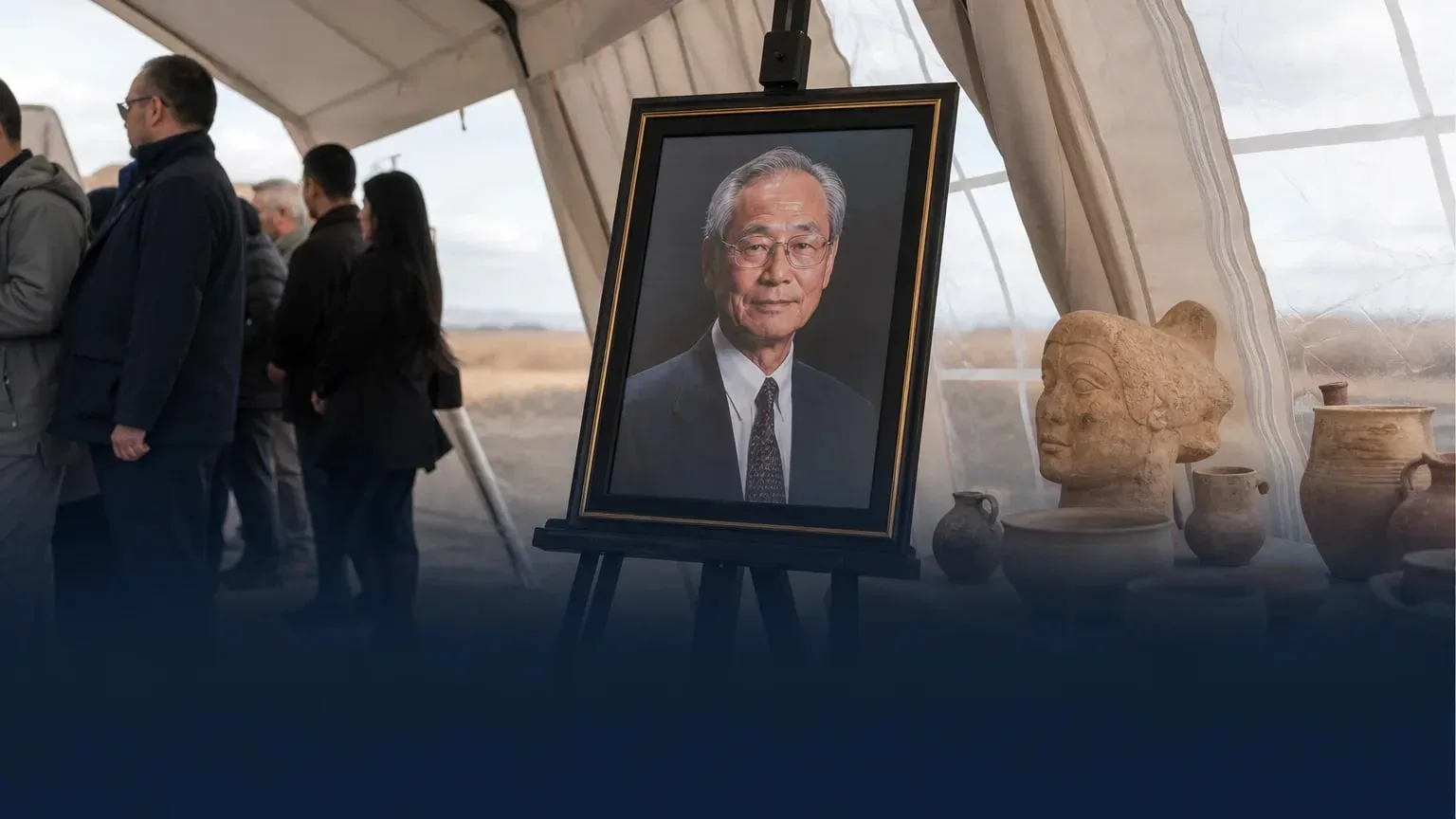
Yükseköğretim Kurulu Başkanı Erol Özvar, Kırşehir’in Kaman ilçesinde düzenlenen törende, ömrünün yaklaşık 50 yılını Anadolu’nun tarihini araştırmaya adayan Japon bilim insanı Prof. Dr. Sachihiro Omura’yı andı. Törende, Omura’nın Kaman-Kalehöyük kazılarıyla Orta Anadolu’nun yerleşim tarihine önemli katkı sunduğu vurgulandı; üniversitede adına bir arkeoloji araştırma laboratuvarı da açıldı.
Key facts
- The commemoration ceremony was held at the Japanese Institute of Anatolian Archaeology in Kaman, Kırşehir.
- Özvar said Omura came to Turkey in the early 1970s and worked on Anatolian archaeology for about 50 years.
- Officials said the Kaman-Kalehöyük excavations shed light on Central Anatolia’s thousands of years of settlement history.
- The Prof. Dr. Sachihiro Omura Archaeological Research Laboratory opened at the Faculty of Arts and Sciences of Kırşehir Ahi Evran University.
- The event also included a photo exhibition and a short documentary titled “A Lifetime on Anatolian Soil: Dr. Sachihiro Omura and the Kaman Excavations.”
What does this mean for students and researchers?
The ceremony and laboratory opening show that work around Kaman-Kalehöyük is not only being remembered, but also given an institutional base for future research. The new laboratory is intended to support new studies that contribute to Anatolian archaeology.
According to Özvar, Japanese and Turkish archaeologists, researchers, students and excavation workers have worked together for many years. That makes the laboratory especially relevant for people studying archaeology and those taking part in excavation work, where field experience and shared research practices matter.
- Relevant institution: Faculty of Arts and Sciences, Kırşehir Ahi Evran University
- Focus area: Archaeological research and excavation work
- Institutional link: Japanese Institute of Anatolian Archaeology and Turkish-Japanese academic cooperation
Why was Omura remembered?
Prof. Dr. Omura came from Japan to Turkey in the early 1970s and expanded knowledge of Central Anatolia through the Kaman-Kalehöyük excavations he began in 1986. Erol Özvar said the finds unearthed in the digs enriched understanding of the Bronze and Iron Ages in particular.
Özvar described Omura not only as a scientist, but also as someone who worked to keep scientific institutions alive. He said Omura helped lead the establishment of the Japanese Institute of Anatolian Archaeology in 1998 and devoted considerable effort to sustaining its activities.
How did Kaman-Kalehöyük change the picture?
The Kaman-Kalehöyük excavations shed light on Central Anatolia’s thousands of years of settlement history and strengthened archaeological knowledge of the region. Özvar said the work was carried out through the joint efforts of Turkish and Japanese researchers, creating a long-running model of scientific cooperation.
He also said Omura built close friendships with local people in Kaman and that his contribution to Turkey went beyond archaeology. In Özvar’s view, that legacy stands as one of the lasting products of Turkish-Japanese friendship.
How is Turkish-Japanese cooperation continuing?
Speaking at the event, Özvar said cooperation between the two countries in science, technology and higher education is growing. He said the Turkish-Japanese Science and Technology University, which admitted its first students this year, will bring together the scientific experience and research knowledge of both countries.
Japan’s Ambassador to Ankara, Tamura Masami, said the Japanese Institute of Anatolian Archaeology is a unique academic institution in Turkey because it combines excavation, preservation, research and exhibition. Kırşehir Governor Murat Sefa Demiryürek said it was important for young people to see excavation work up close.
Why does the laboratory opening matter?
The Prof. Dr. Sachihiro Omura Archaeological Research Laboratory, established at the Faculty of Arts and Sciences of Kırşehir Ahi Evran University, is meant to keep Omura’s name alive through new research. Özvar said he was pleased that such an important scientist would be remembered in a laboratory that serves scientific production.
After the opening, Özvar toured the laboratory, examined artifacts found in various excavations and received information about the ongoing work. After the ceremony, the delegation also visited Governor Murat Sefa Demiryürek at his office.
Frequently asked questions
Where will Prof. Omura’s name be kept alive?
Prof. Dr. Sachihiro Omura’s name will be preserved in the Prof. Dr. Sachihiro Omura Archaeological Research Laboratory established at the Faculty of Arts and Sciences of Kırşehir Ahi Evran University. The laboratory is intended to support new research.
Which institutions stood out at the event?
The Japanese Institute of Anatolian Archaeology, Kırşehir Ahi Evran University, the Council of Higher Education and the Turkish-Japanese Science and Technology University were among the institutions highlighted at the event. The institute was described as a structure that brings excavation, preservation, research and exhibition together.