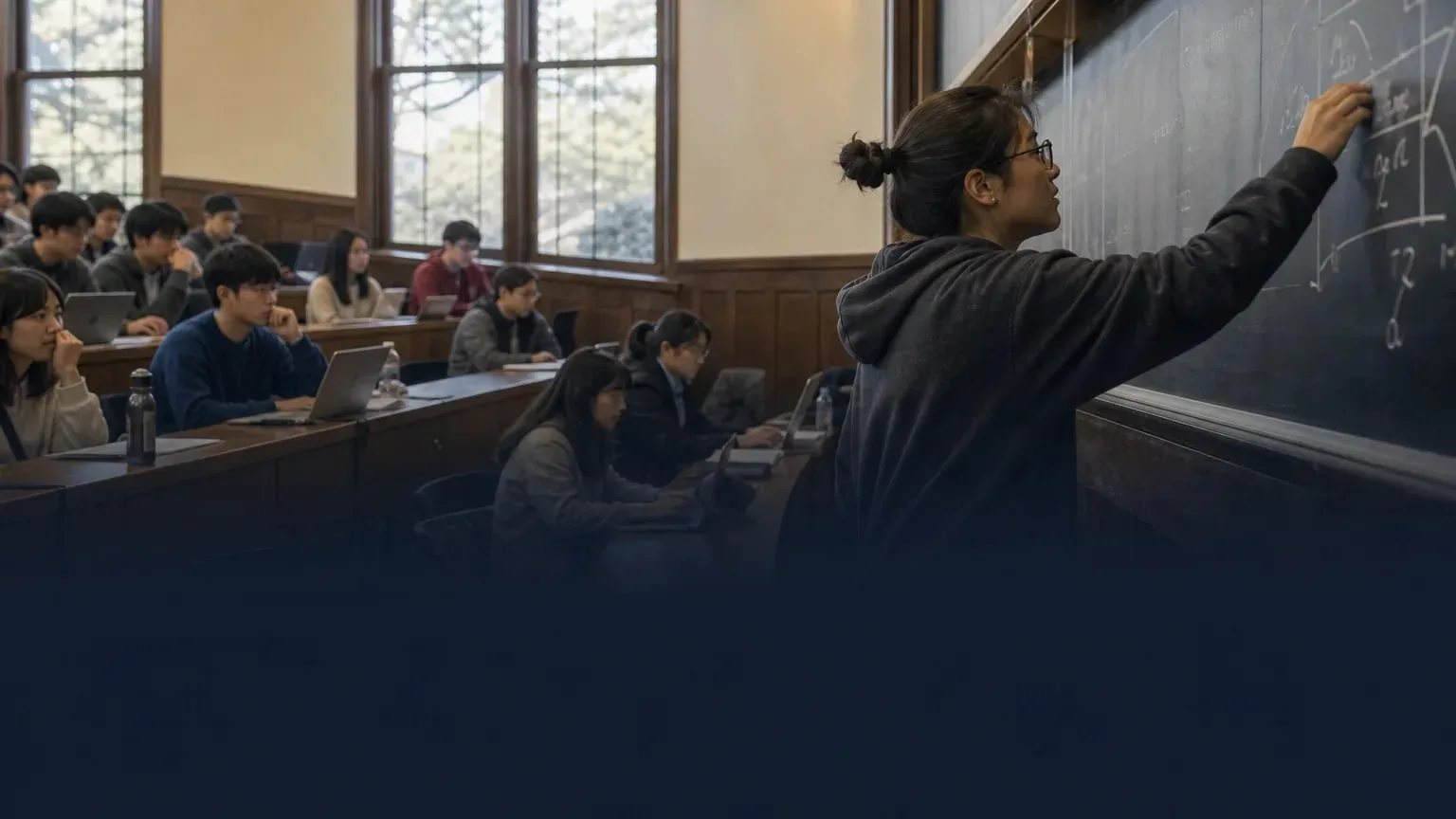
At UC Berkeley Homecoming on Oct. 9, 2026, teaching professor John DeNero argued that artificial intelligence is changing computing education, but not eliminating the need for students to build real skill. His message, aimed at students, parents and alumni, was that AI can help learning only when it supports practice, feedback and human judgment.
Key facts
- DeNero teaches in the Department of Electrical Engineering and Computer Sciences and serves as faculty director of pedagogy for the Data Science Undergraduate Studies program.
- He said AI tools should guide students toward mistakes rather than give away answers.
- Berkeley researchers have tested AI tutoring approaches such as 61A Bot in CS 61A.
- DeNero said students who have built software themselves tend to use AI more effectively.
- He also said human evaluation remains necessary for judging whether AI tools solve the problems they are meant to solve.
What this means for Berkeley students
For students in computing and related courses, DeNero’s message points to a clear shift in how AI should be used: as a tutor, not a shortcut. He said homework still matters because it gives students practice applying concepts, discovering how techniques work in new settings and checking whether they can solve problems on their own.
That has practical implications for students using AI tools on assignments. DeNero said AI that explains homework solutions can create the feeling of progress without giving students the repetition and self-checking that build competence. By contrast, tools that provide individualized feedback and direct students to errors are closer to the kind of support Berkeley is exploring.
He also pointed to a broader takeaway for students entering AI-heavy fields: the better they understand the underlying code and concepts, the more useful AI becomes. In his view, students who can scrutinize an AI plan, read generated code and make specific revision requests are better positioned to benefit from these tools.
Why does Berkeley think AI should not replace homework?
DeNero said homework is still important because it gives students the practice they need to learn computer science. In his view, watching an AI explain a solution may feel productive, but it does not replace the work of applying concepts, discovering how they transfer to new problems and testing your own ability to solve them.
He compared learning computer science to learning piano: progress comes from doing the work, not only from observing it. That argument was central to his larger point that AI should support learning rather than substitute for it.
How Berkeley is using AI in computing courses
DeNero described early course-tutoring tools developed in 2023 by UC Berkeley, Harvard University and Khan Academy as examples of a different model. These tools were designed not to provide answers outright, but to guide students toward mistakes and help them correct their thinking.
At Berkeley, he highlighted 61A Bot, an interactive AI assistant used in CS 61A as a personalized homework tutor. According to DeNero, the system explains why an answer is wrong and what a student needs to do next, instead of simply marking the answer incorrect.
He said Berkeley researchers are continuing to study other ways AI can enhance learning inside and outside the classroom. One example is an “interviewing assistant” approach in which students are asked about their answer every time they complete a homework problem correctly.
What does human competence add when AI is getting better?
DeNero’s answer was that human judgment still matters because AI systems must be evaluated by people. He said companies building AI need to know whether a tool is actually solving the problem it is meant to solve, and that remains a human task.
He also cited a 2026 Anthropic study showing different success rates for Claude Code sessions among novice and expert users. His point was not that AI is useless, but that experience changes how effectively people can use it. Students who already understand software, he said, are more likely to question the AI’s plan, inspect its output and make targeted corrections.
Who is the faculty voice behind Berkeley’s push?
John DeNero is a teaching professor in Berkeley’s Department of Electrical Engineering and Computer Sciences and faculty director of pedagogy for the Data Science Undergraduate Studies program. He was also recognized earlier this year with the Fiat Lux Faculty Award for helping develop educational programs, including co-founding Berkeley’s data science undergraduate major.
His Homecoming remarks connected that teaching work to a broader campus question: how to build computing education that uses AI without weakening students’ ability to think, practice and evaluate for themselves.