
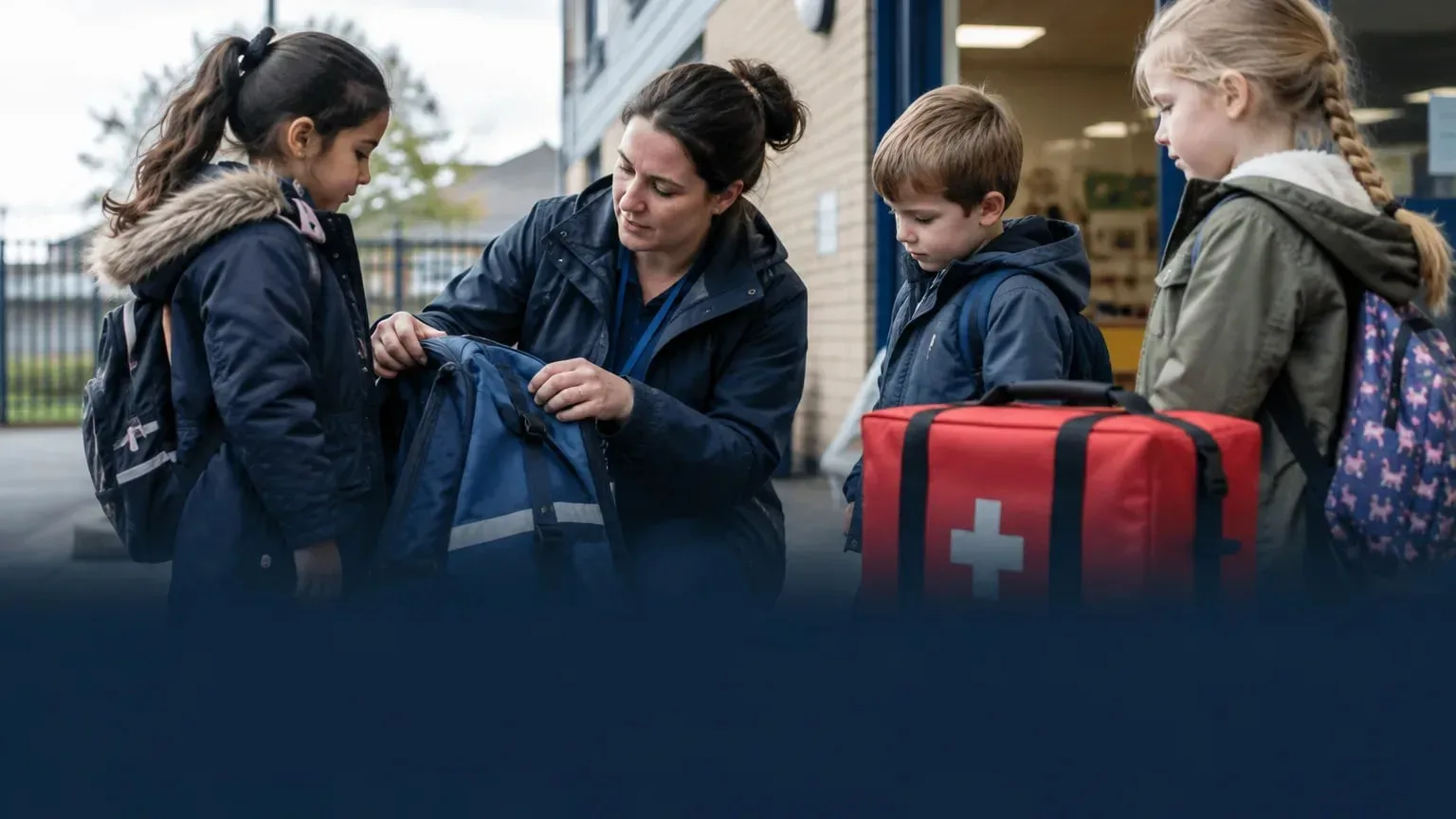
The Department for Education has updated its emergency preparedness, response and recovery guidance for education, childcare and children’s social care settings in England, with new incident-specific action cards intended to help settings take immediate action during emergencies. The guidance applies across a wide range of providers, from schools and colleges to universities, nurseries and children’s social care residential providers.
Key facts
- The guidance was last updated on .
- It applies to education, childcare and children’s social care settings in England.
- The update added incident-specific action cards to support immediate action during emergencies.
- Annex A provides rapid-reference action cards for a range of emergency scenarios.
- Annex B explains which children and young people may need prioritising for face-to-face provision during an emergency.
Who does the updated guidance cover?
The updated guidance covers childcare providers, including childminders, pre-schools, nurseries and reception classes; wraparound and out-of-school provision such as breakfast clubs, after-school clubs, tuition and community activities; children’s social care residential providers; schools; colleges and other further education providers; universities and other higher education providers; alternative provision settings; and specialist schools and settings for children, young people and learners with special educational needs and disabilities.
In practice, that means the guidance is intended for much of the education and care sector in England, rather than for a single type of institution.
What this means for schools, providers and families
For settings covered by the guidance, the update matters because it is designed to support preparation for emergencies, immediate response and recovery afterwards. The Department for Education says the revised material now includes incident-specific action cards, giving providers a rapid-reference tool during emergency situations.
The guidance may also affect how settings plan face-to-face provision during disruption. Annex B sets out which children and young people may need to be prioritised for face-to-face provision during an emergency, which is likely to be especially relevant for schools, childcare providers and social care settings making operational decisions under pressure.
- Settings in England may need to review the updated guidance published on .
- Providers covered range from nurseries and schools to colleges, universities and children’s social care residential providers.
- Annex A offers action cards for emergency scenarios.
- Annex B addresses priority groups for face-to-face provision during an emergency.
What changed in the latest update?
The Department for Education’s update on says it revised the guidance on preparing for, responding to and recovering from emergencies and added incident-specific action cards to help settings take immediate action. That adds to earlier changes made since the guidance was first published on .
Those previous updates included information on emergency alerts, building local partnerships and recording attendance for remote education in May 2023, as well as earlier changes to contact details, incident support information and references to extreme heat as an example of severe weather.
What is included in the emergency preparedness guidance?
The guidance is supported by two annexes. Annex A is a set of action cards providing rapid-reference information for responding to a range of emergency scenarios. Annex B explains which children and young people settings may need to prioritise for face-to-face provision during an emergency.
Taken together, the main guidance and annexes are intended to help settings prepare for emergencies, respond when an incident happens and manage recovery afterwards.
FAQ
Who is the guidance for?
The guidance is for education, childcare and children’s social care settings in England, including schools, colleges, universities, childcare providers, wraparound provision, alternative provision, specialist SEND settings and children’s social care residential providers.
What was added in the latest update?
In the update dated , the Department for Education added incident-specific action cards to help settings take immediate action during emergencies and updated the guidance on preparation, response and recovery.


